Somali Observatory for Humanitarian Affairs The Voice of Reality.. The Eye of Humanitarian Truth in Somalia

Related Articles


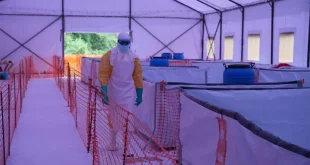
MOGADISHU– Kenya’s announcement today, Tuesday, of an imported case of Bundibugyo virus disease, a type of Ebola virus disease, has once again highlighted the importance of strengthening Somalia’s preparedness to address cross-border epidemic risks. The patient had arrived in Kenya after travelling from the Democratic Republic of the Congo through Uganda, before dying on Monday, according to the health information released. Meanwhile, the Somali National Institute of Health announced enhanced preparedness and surveillance measures, confirming that no confirmed cases had been recorded in the country at the time its statement was issued.
The announced measures include strengthening health surveillance at points of entry, increasing the readiness of rapid response teams, and improving laboratory and isolation capacity. These steps are particularly important given regional travel, making the rapid detection, verification and reporting of suspected cases, as well as their referral to the relevant authorities, essential to reducing the risk of transmission. Implementing these measures also requires sustained coordination among health authorities, airport administrations and agencies responsible for border monitoring.
Effective preparedness extends beyond screening procedures on arrival. It also depends on health facilities’ ability to manage suspected cases safely, provide protective equipment for healthcare workers, and ensure that samples are collected, transported and tested in accordance with safety protocols. Clear procedures for referral, isolation and medical response are equally necessary. However, the official information cited here does not provide sufficient data to assess current readiness across all Somali points of entry and health facilities, or to conclude that previously identified challenges have been fully addressed.
Regional coordination is especially important given Nairobi’s role as a hub for air travel and humanitarian operations, as well as the movement of passengers along multiple routes across the Horn of Africa and eastern Africa. This requires risk-based procedures that take account of travel history and potential symptoms, rather than relying on initial screening alone. Timely sharing of epidemiological information, staff training, and consistent reporting and response mechanisms also remain essential to containing any suspected case without causing public alarm or imposing restrictions unsupported by health risk assessments.
These developments underscore that protecting Somalia from epidemic threats requires an integrated system combining border surveillance, laboratory diagnosis, rapid response, public health communication and coordination among the federal government, member states and regional partners. Such efforts become more important amid the ongoing risk associated with the outbreak in the Democratic Republic of the Congo. Advance preparedness, information-sharing and regular training are therefore central to protecting public health, while it remains important to clarify that the case announced in Kenya does not mean that confirmed infections have been reported in Somalia.