Somali Observatory for Humanitarian Affairs The Voice of Reality.. The Eye of Humanitarian Truth in Somalia
Related Articles


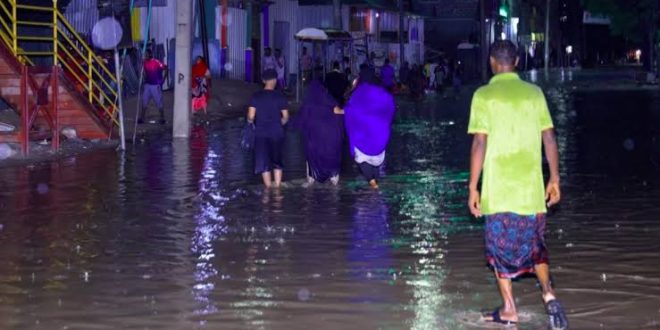
MOGADISHU – Heavy rains that fell on Mogadishu on Monday, flooded major roads and intersections, disrupting traffic, business activities and schooling amid warnings of flood risks during the Deyr rainy season, which runs from October to December. Accumulated water caused vehicles to stall and made it difficult for pedestrians to move, while some open-air markets were forced to close and work stopped at construction sites inundated by water and mud. These developments have renewed attention to the capital’s infrastructure capacity to drain rainwater and limit its effects on residents and economic activity.
The flooding highlighted ongoing challenges in the city’s drainage networks. Officials said structures and barriers built along natural water pathways had obstructed water flow. The source report quoted Environment and Climate Change Minister Bashir Mohamed Jama as warning that obstructions near the road linking Aden Adde International Airport and the Turkish Embassy could put around 40 households at risk if the problem remains unresolved. Banadir Deputy Governor Mohamed Ahmed Diriye also said buildings and structures erected by various entities had contributed to blocking natural waterways. These statements underscore the need to assess blocked drainage points, address obstructions, improve channel maintenance and regulate urban expansion in flood-prone areas.
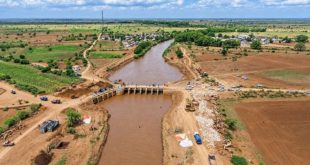
Beyond the capital, concerns are growing over riverine flooding. According to the report, the Somali Disaster Management Agency (SoDMA) placed 29 districts across 14 regions under flood-risk warnings. The report also quoted SoDMA Commissioner Mohamud Moallim Abdulle as saying that the Shabelle River had breaches or bank failures at 366 locations, warning of potential risks to nearby areas. Officials attributed the worsening situation to sediment accumulation and inadequate maintenance and dredging over many years, while insecurity in some areas has hindered mitigation work. These factors increase the importance of monitoring water levels, assessing the most vulnerable locations and preparing evacuation and response plans where necessary.
The warnings come as Somalia’s humanitarian response faces funding shortages. According to figures cited in the report, the 2026 Humanitarian Needs and Response Plan sought $852 million to reach 2.4 million people but had received only 29.7% of its target by August, leaving a shortfall of approximately $599 million. The report also noted a decline in the World Food Programme’s capacity to reach people in need compared with previous crises. Funding shortages may limit humanitarian agencies’ ability to expand assistance and pre-position supplies, making risk-based prioritisation and the delivery of aid to threatened communities particularly important during the rainy season.
Seasonal warnings point to increased risks of heavy rainfall, flash floods and riverine flooding in parts of Somalia during the Deyr season, particularly in areas near the Shabelle and Juba rivers. However, the level of risk and its potential effects vary by location, and forecasts alone cannot establish the likely scale of damage. Reducing losses requires a combination of early warning, river-channel maintenance, improved rainwater drainage, regulation of construction along natural waterways, and stronger evacuation and humanitarian response capacity. It is also necessary to address the causes of recurring urban water accumulation rather than relying solely on emergency interventions after flooding occurs.