Somali Observatory for Humanitarian Affairs The Voice of Reality.. The Eye of Humanitarian Truth in Somalia
Related Articles

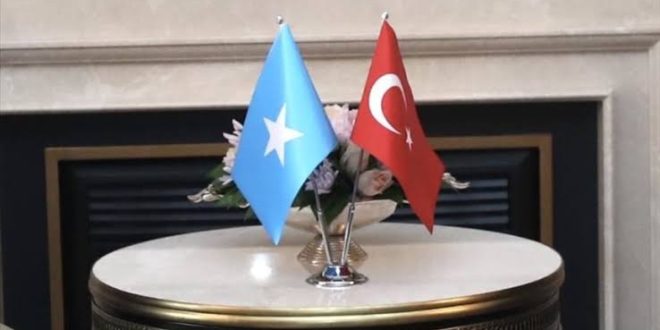
ANKARA — Somalia’s Minister of Education, Culture and Higher Education, Farah Sheikh Abdulkadir, discussed ways to strengthen bilateral cooperation in education and higher education with Türkiye’s Deputy Minister of Education, Celile Eren Ökten, during a meeting held in the Turkish capital, Ankara. Somalia’s Ambassador to Türkiye, Fathudin Ali Mohamed, also attended the meeting, according to a statement issued by Somalia’s Ministry of Education.
The meeting addressed prospects for expanding the educational partnership between the two countries, including scholarships, academic exchanges and the development of educational institutions. This comes amid ongoing discussions between Somali and Turkish officials on strengthening higher education cooperation and expanding opportunities to exchange expertise among universities, researchers and academic staff.
Existing cooperation includes opportunities for Somali students to study at Turkish universities through scholarship programmes, alongside the activities of the Turkish Maarif Foundation in Somalia. Discussions also cover the development of technical and vocational education, including consideration of establishing a vocational school in Somalia, with the aim of strengthening practical training and preparing young people for specialisations that meet labour-market needs.
Cooperation between the two countries also extends to science and technology. Last July, Somali students studying in Türkiye participated in a specialised training programme hosted by the Turkish Space Technologies Research Institute, TÜBİTAK UZAY. This activity forms part of efforts to prepare human resources in advanced technical fields, including areas related to the spaceport project that Türkiye is working to establish in Somalia, according to media reports.
The development of technical and vocational education is important in light of the need to strengthen practical skills and align educational outcomes with the requirements of the Somali economy. Expanding educational cooperation could create additional opportunities to prepare young people and develop their capabilities. Achieving a sustainable impact, however, will depend on how closely educational and training programmes match labour-market needs, the availability of employment opportunities for graduates, and the capacity of Somali institutions to develop and sustain these programmes locally.