Somali Observatory for Humanitarian Affairs The Voice of Reality.. The Eye of Humanitarian Truth in Somalia
Related Articles


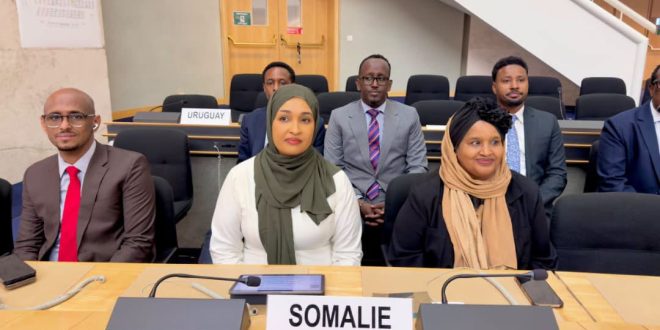
MOGADISHU — Somalia’s Minister of Family and Human Rights Development, Ambassador Khadija Mohamed Al-Makhzoumi, met with UN Deputy High Commissioner for Human Rights Awa Dabo to discuss strengthening cooperation between Somalia and the Office of the UN High Commissioner for Human Rights (OHCHR), with a focus on efforts to operationalise an OHCHR office in Mogadishu.
The meeting, held in Geneva on Friday, examined the proposed office’s role in supporting national institutions, strengthening human rights protection, and expanding technical assistance and cooperation between the Somali government and the United Nations. Al-Makhzoumi expressed appreciation for OHCHR’s support and reaffirmed her ministry’s commitment to continued international cooperation in this area. The meeting was attended by the ministry’s Director General, Mohamed Bashir Omar, as well as experts and advisers.
The meeting followed the minister’s address to the 63rd session of the UN Human Rights Council, during which she called for the OHCHR office in Mogadishu to become fully operational. She said the Somali government had supported 259 recommendations under the fourth cycle of the Universal Periodic Review. She also outlined progress in preparing initial reports under the Convention on the Rights of the Child, the Convention against Torture, the International Covenant on Economic, Social and Cultural Rights, and the International Covenant on Civil and Political Rights.
The minister also outlined steps the government said it had taken to strengthen the country’s human rights framework. These included the approval of a national bill to combat female genital mutilation in 2025, the launch of the country’s first national justice sector strategy, and human rights training programmes for police officers, custodial personnel and prosecutors.
The discussions follow the transfer of human rights-related responsibilities to Somali institutions under the 2025–2026 Human Rights Transition Plan, which was linked to the work of the Human Rights and Protection Group of the UN Transitional Mission in Somalia. Previous UN support included technical assistance for legislative and policy development, capacity-building, outreach, and human rights and protection training for Somali security forces. The transfer reflects a move towards greater national responsibility for human rights, without necessarily signalling the end of international cooperation.
Efforts to operationalise the OHCHR office in Mogadishu are based on the Host Country Agreement signed by Somalia and the United Nations on May 6, 2026, with UN High Commissioner for Human Rights Volker Türk signing on behalf of the UN. The agreement provides a framework for cooperation covering human rights monitoring, reporting, technical assistance and capacity-building, while the establishment of the office remains contingent on funding. The signing of the agreement did not itself mean that the office had begun operating, and the minister called for its full operationalisation in her address to the Human Rights Council.