Somali Observatory for Humanitarian Affairs The Voice of Reality.. The Eye of Humanitarian Truth in Somalia
Related Articles


KISMAYO — In a solemn spiritual scene overflowing with devotion and divine connection, and with innocent hearts filled with absolute certainty, childhood innocence manifested in its most profound form as pathways narrowed. The squares of “Kolbio” transformed into a platform for collective supplication, where eyes turned heavenward seeking rain—a powerful declaration of human resilience in the face of climatic severity and the bitterness of drought.
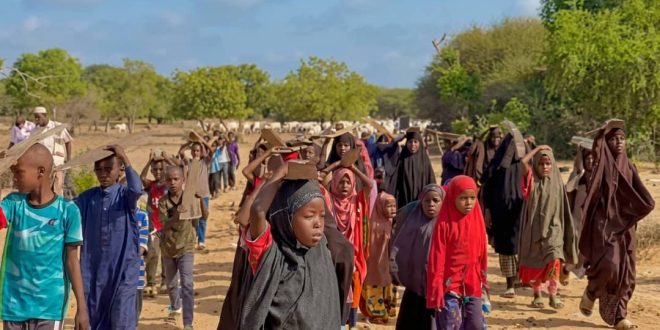
The area of “Kolbio” in the Lower Juba province of Jubaland State witnessed a massive spiritual procession organized by students of traditional Quranic schools (Dugsi). Hundreds of children engaged in a majestic religious demonstration for “Istisqa” (prayer for rain), pleading with the Almighty to send down relief and alleviate the suffering of a land exhausted by drought.
The young children painted a deeply moving emotional portrait as they roamed the dusty paths carrying wooden “Quranic tablets” atop their heads. This ancient religious tradition invokes the highest meanings of humility and hope, amidst an atmosphere of absolute reverence, awaiting heavenly mercy to quench the parched earth and revive barren pastures.
This initiative comes amidst exceptional climatic conditions ravaging Jubaland in 2026. The severe lack of rainfall has eroded livelihoods and exacerbated survival crises, particularly for pastoral and farming communities who face existential challenges threatening their communal stability.
The event featured grand “Dhikr” circles, where children’s voices rose in fragrant recitations and supplications that shook the region. They prayed for the lifting of hardship and for rain to descend upon the lifeless earth and thirsty livestock, embodying the highest values of spiritual solidarity and emotional unity with the community.
Elders and teachers of the Quranic schools supervised this spiritual scene, leading the procession in traditional dignity. They guided the youngsters in the etiquette of supplication, emphasizing that faith and patience are the first shields against natural disasters and the destiny-defining challenges currently facing the nation.
Organizers explained that involving these youths in the rain prayers aims to instill values of absolute trust in the Creator within the rising generation, strengthening the concept of collective responsibility and transforming the suffering caused by drought into a spiritual energy that radiates hope.
This practice is an inherent cultural and religious heritage in the Somali conscience, where the prayers and recitations of children are viewed as a spiritual force capable of invoking divine grace—a revival of ancient prophetic traditions performed when distress intensifies and resources vanish.
The procession resonated deeply with the residents, as the voices of the people merged with the children in a unified prayer. This reflects the strength of the social and spiritual fabric binding the Somali people, transforming environmental tragedy into an inspiring story of human resilience under the banner of faith.
These scenes stand as a living testament to the nobility of Somali society and its ability to invoke its value-based heritage to face crises. With humble hearts looking toward the horizon, they await the clouds of mercy to restore growth to the land and hope to souls weary from waiting.
These spiritual initiatives serve as a vital emotional and social safety valve in crisis regions. Seeking refuge in faith-based values represents a bridge from despair to hope, transforming human suffering into a source of collective patience that preserves dignity and safeguards the sacred bonds between humanity and the land.