Somali Observatory for Humanitarian Affairs The Voice of Reality.. The Eye of Humanitarian Truth in Somalia
Related Articles

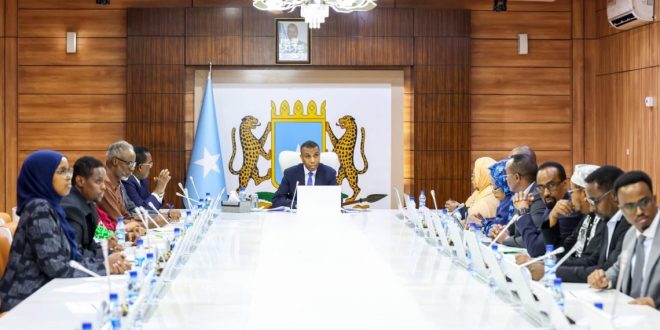
MOGADISHU – Somali Prime Minister Barre today, Saturday, chaired the first meeting of the High-Level Committee for Disaster Risk Management, which discussed ways to strengthen national preparedness to address drought and potential flood risks amid the continuing impacts of drought in several areas and the approaching rainy season. The meeting focused on the importance of taking proactive measures to reduce the effects of disasters and protect communities and property.
The meeting reviewed reports on the current drought situation, as well as potential risks arising from heavy rainfall that could cause flooding in parts of the country, particularly areas near rivers, waterways and low-lying terrain. Discussions focused on the need to identify areas most exposed to risks in advance and strengthen the readiness of institutions and local authorities, enabling preventive measures to be taken in a timely manner and reducing potential losses.
Barre stressed the importance of intensifying community awareness efforts on flood risks, particularly among residents living near rivers, low-lying areas and water drainage channels, emphasizing the need for warnings and guidance to be delivered clearly and in a timely manner. He highlighted the importance of strengthening local communities’ ability to understand early warnings and take appropriate preventive measures, including moving to safer areas when necessary.
The Prime Minister underscored the need to strengthen the readiness of government agencies, local authorities and emergency response teams, and to enhance coordination among them and humanitarian partners, while ensuring the availability of the resources and logistical capacities required for a rapid response to emergencies. He stressed that linking emergency plans with early warning mechanisms would improve the speed of decision-making and response and help direct available resources toward areas most exposed to risk.
The committee also discussed ways to coordinate relief efforts and mobilize the resources needed to address the humanitarian consequences of recurring droughts and floods, emphasizing the importance of contributions from donors, Somali businesspeople and the private sector in supporting rescue and assistance operations. At the conclusion of the meeting, Barre directed the committee to intensify coordination among relevant authorities and strengthen early preparedness to ensure a rapid response to emergencies and direct assistance to communities and areas most in need.
Somalia continues to face recurring climate-related risks, including periods of drought, irregular rainfall and flash floods, phenomena that directly affect people’s lives and livelihoods, services and infrastructure while increasing the vulnerability of affected communities. In this context, strengthening preparedness and moving toward a proactive approach to disaster risk management is increasingly important, based on developing early warning systems, improving the collection and sharing of information, strengthening the readiness of institutions, local authorities and emergency response teams, and increasing community awareness of risks and prevention measures. Coordinated efforts among the government, humanitarian partners, donors and the private sector are also an important element in building a more effective national capacity to respond to disasters, reduce their losses and strengthen communities’ resilience and ability to recover from their impacts.