Somali Observatory for Humanitarian Affairs The Voice of Reality.. The Eye of Humanitarian Truth in Somalia
Related Articles



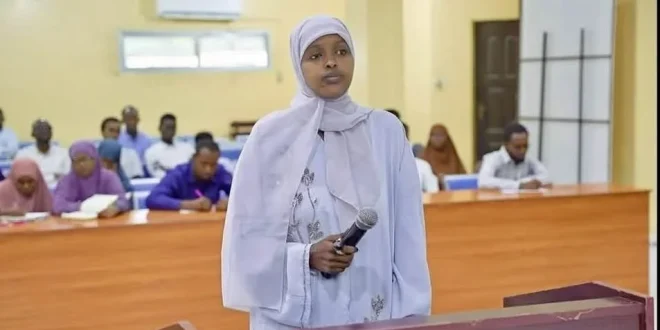
MOGADISHU – Amnesty International has called on the Somali authorities to immediately and unconditionally release activist Sadia Moalim Ali, locally known as “Sadia Bajaj,” following a court ruling sentencing her to three years in prison, saying that her detention and prosecution are, in its assessment, linked to her peaceful exercise of freedom of expression and public activity.
Authorities arrested Saadia in Mogadishu on April 12, before the Banadir Regional Court sentenced her to three years in prison on June 25 on charges related to public incitement. The case has brought renewed attention to the guarantees of a fair trial, the limits of freedom of expression and the space for civic activity, as Somalia continues efforts to develop its judicial institutions and strengthen the rule of law.
Amnesty International said, following its communication with Sadia while she was in detention, that the case was, according to its assessment, linked to her public activities, including comments she posted on social media and her participation in peaceful protests. The organization renewed its call for her release, stressing that exercising the right to peaceful expression and civic participation should not be a basis for punishment, after it had previously called for her release following her arrest.
The case has also drawn attention from Somali civil society organizations, including the Somali Women Journalists Organization, which called in May for Sadia’s release and expressed concerns about freedom of expression and the situation of women activists. These positions underline the importance of safeguarding the rights of defendants and respecting legal procedures, while allowing judicial appeal and review mechanisms to consider rulings in accordance with the law.
Sadia’s professional background is in midwifery, before she moved into other forms of work due to difficulties in securing employment and later worked as a “tuk-tuk” driver in Mogadishu. She gained a public presence through social media platforms by addressing social and economic issues affecting citizens’ daily lives, including unemployment, rising living costs and challenges facing families, which contributed to expanding her following among different sections of society.
Sadia says her public activity was linked to her personal experience of seeking employment and supporting her family, as well as to the difficulties she observed others facing in earning their livelihoods. She also spoke about the impact of her detention on her family life, saying that it separated her from her young daughter, who was still breastfeeding when the verdict was issued, and noting that she was one of the main providers for her family. She also said that she experienced health problems during detention and spoke of attempts to persuade her to stop expressing herself publicly, allegations that could not be independently verified.
Following the verdict, Sadia called for her case to be handled through a fair legal process and warned against turning it into a political or clan-based confrontation, calling for an independent review of the ruling against her. Her position underscores the importance, from her perspective, of keeping the case within its legal and judicial framework, away from disputes that could heighten polarization or turn an individual case into a broader conflict.
The case of Sadia Bajaj comes as Somalia continues to develop its judicial institutions and strengthen the rule of law, alongside multiple security, political and social challenges. While the authorities stress the importance of enforcing the law and protecting public order, rights organizations continue to emphasize the need to safeguard freedom of expression and the rights of activists, human rights defenders and journalists, in line with the principles of fair trial and due process.
The case of Sadia Moalim Ali carries significance beyond her individual circumstances because of the debate it has generated over the relationship between law enforcement and the protection of public rights and freedoms. As the case continues through the judicial process and rights groups maintain calls for its review, respect for legal procedures, the right to defense and appeal, and the independence of judicial institutions remain essential to strengthening public confidence in the judiciary and consolidating the rule of law in Somalia.