Somali Observatory for Humanitarian Affairs The Voice of Reality.. The Eye of Humanitarian Truth in Somalia
Related Articles

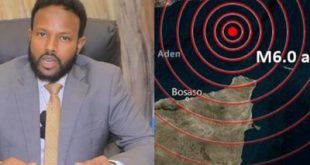

BENGHAZI – Somalia strengthened its presence in regional and international discussions on human rights, justice, and reform through the participation of a delegation from the National Independent Human Rights Commission of Somalia in the First International Conference on Justice and Reform, hosted by the Libyan city of Benghazi from July 28 to 30, 2026, with the participation of human rights and judicial institutions, legal experts, and representatives of several countries and organizations concerned with justice and the rule of law. The participation came as Somalia increasingly seeks to expand rights-based partnerships, exchange expertise, and benefit from regional and international experiences in developing mechanisms for protecting rights and strengthening the rule of law.
The Somali delegation was led by Acting Chairperson of the National Independent Human Rights Commission, Mohamed Harun Mahmoud, who took part in sessions addressing issues related to justice-sector reform, improving conditions in correctional and rehabilitation institutions, protecting the rights of persons deprived of their liberty, and developing oversight and accountability mechanisms in line with international standards. The delegation stressed the importance of ensuring that rights-based partnerships are built on the exchange of expertise, capacity-building, and the strengthening of national institutions, helping countries develop more effective responses to growing human rights and humanitarian challenges.
Irregular migration received particular attention during the Somali participation, given the humanitarian, security, and social challenges it poses to Somali youth, some of whom undertake dangerous journeys along irregular migration routes. The Commission stressed that addressing the phenomenon cannot be limited to security measures or responding to violations after they occur, but requires a comprehensive approach that places human protection at the center of policy, combining efforts to combat human trafficking and smuggling, raise awareness of the risks, and expand opportunities for education, employment, and development for young people within their communities.
The Somali delegation also held discussions with Libyan human rights institutions, including the Libyan Human Rights Commission and bodies concerned with monitoring prisons and detention facilities, on ways to strengthen cooperation on issues of mutual concern. The discussions focused on protecting Somali youth in Libya, improving channels for information and expertise exchange, and developing mechanisms for addressing issues involving migrants and detainees in a manner that safeguards their rights and human dignity. The Libyan institutions expressed their readiness to continue coordination with Somali counterparts in support of humanitarian approaches that move beyond isolated responses.
The conference also provided the Somali Commission with an opportunity to hold bilateral meetings with a number of participating human rights and legal institutions and figures, focusing on opportunities to establish new partnerships in rights protection, institutional capacity-building, strengthening the independence of national bodies, and exchanging experiences in oversight and accountability. For Somalia, these contacts represent an opportunity to broaden its network of rights-based relations beyond traditional frameworks and bring issues affecting its citizens to wider regional and international platforms, strengthening its presence in discussions on justice and human rights.
Somalia’s participation in Benghazi reflects a broader effort to strengthen national human rights institutions and enhance their capacity to fulfill their mandates, alongside wider efforts to build state institutions and reinforce the rule of law. The step is particularly significant given the cross-border nature of migration, human trafficking, and detention-related issues, which cannot be effectively addressed through isolated national efforts. From this perspective, partnerships among Somali, Libyan, regional, and international institutions can provide an important pathway toward more coordinated and humane responses that address rights protection alongside the economic and social factors driving young people toward risky journeys.
Somalia’s participation in Benghazi comes at a time when the country is seeking to strengthen the presence of its national institutions in regional and international forums and expand cooperation in justice, human rights, and institutional reform. Irregular migration remains one of the most pressing issues linking the Horn of Africa and North Africa, given its connections to poverty, unemployment, human trafficking, and migrant protection. Against this backdrop, stronger rights-based cooperation among Somalia, Libya, and their regional and international partners could contribute to more comprehensive approaches that balance human protection, the rule of law, and development while providing Somali youth with safer and more dignified opportunities both within their communities and beyond them.