Somali Observatory for Humanitarian Affairs The Voice of Reality.. The Eye of Humanitarian Truth in Somalia
Related Articles
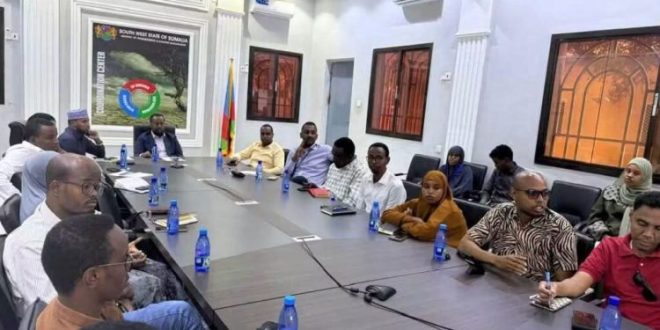
BAIDOA – The Ministry of Humanitarian Affairs and Disaster Management of South West State of Somalia held a high-level coordination meeting last Tuesday in Baidoa to assess the current humanitarian situation and strengthen early preparedness plans to address the potential impacts of the El Niño phenomenon and extreme climate changes that may affect wide areas of the country in the coming period.
The meeting was held as part of ongoing efforts to strengthen a proactive approach to humanitarian crisis management and move from emergency response toward early planning and risk prevention through improved coordination between government institutions and humanitarian partners, enhancing local communities’ ability to address potential climate-related challenges.
The meeting was chaired by South West State Minister of Humanitarian Affairs and Disaster Management Abdulnasser Abdi Arush, with the participation of representatives from United Nations agencies and humanitarian organizations. Participants discussed major humanitarian challenges affecting the state, including malnutrition, food insecurity, drought impacts, and risks associated with severe climate changes and possible heavy rainfall that could lead to flooding and widespread damage.
Minister Abdulnasser Abdi Arush emphasized the importance of increasing preparedness levels and strengthening cooperation between local authorities and humanitarian organizations, stressing that developing early warning systems remains a key pillar in reducing disaster risks and protecting communities, especially vulnerable groups directly affected by humanitarian and climate emergencies.
He explained that early preparedness goes beyond responding after disasters occur, highlighting the importance of building local capacities capable of forecasting risks and responding at the right time to reduce human and material losses while strengthening community resilience.
These measures are particularly important in South West State, one of Somalia’s regions most vulnerable to climate impacts. Large segments of the population depend on agriculture and pastoralism, two sectors highly affected by drought and climate fluctuations, making preparedness plans essential for protecting livelihoods and improving humanitarian stability.
Participants stressed the importance of expanding partnerships between government institutions, international organizations, and local actors, while increasing community participation in preparedness and response programs. They noted that building disaster resilience requires coordinated efforts, shared expertise, and effective information exchange among all stakeholders.
Observers believe these steps reflect a growing focus on strengthening climate risk management in Somalia amid repeated droughts and floods across the Horn of Africa. They emphasized that investment in early warning systems and preventive planning remains among the most effective approaches to protecting communities and reducing the impact of future crises.
The efforts of South West State are part of broader national initiatives aimed at developing a more effective disaster management system and improving humanitarian response through cooperation between Somali authorities and international partners, supporting stability, development, and protection of communities affected by climate challenges.
Climate change and extreme weather events, including the El Niño phenomenon, represent growing challenges for Somalia and the wider Horn of Africa. Recent years have witnessed repeated crises affecting food security, livelihoods, and community stability. In response, early preparedness plans, stronger warning systems, and preventive action have become essential priorities for government institutions and humanitarian organizations. Experts emphasize that building more resilient communities requires a long-term vision based on planning, coordination, and investment in local capacities to protect lives, safeguard livelihoods, and support sustainable development across Somalia.