Somali Observatory for Humanitarian Affairs The Voice of Reality.. The Eye of Humanitarian Truth in Somalia
Related Articles
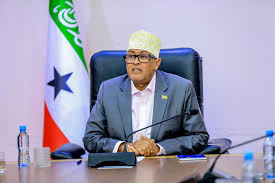
HARGEISA — The President of Somaliland, Abdirahman Mohamed Abdullahi Irro, has officially declared a national emergency in response to a severe drought gripping large parts of the country, particularly the western regions of Awdal and Salal.
In a nationally televised address, reported by Hiiraan Online (HOL), President Irro emphasized the urgent need for immediate action, stating that the drought is among the worst the self-declared republic has experienced in over seven years. He announced the activation of a comprehensive national drought response plan, which includes the rapid deployment of emergency supplies such as food, clean water, medicine, and other critical resources to the most affected areas.
“The drought situation is rapidly worsening, and we must act now,” said President Irro, as quoted by HOL. “The government has prepared a coordinated response, but we are calling on the private sector and development partners to join us. This is a national responsibility.”
The worsening situation in Awdal and Salal—where dried-out pastures and depleted water sources have severely impacted pastoralist communities—has led to mass livestock deaths and forced families to migrate in search of survival necessities.
According to HOL, the crisis has been compounded by the failure of Gu rains earlier this year and the lack of expected summer precipitation. Harsh, dry winds have replaced seasonal rainfall, leaving wells and riverbeds completely parched. Officials warn that this trend reflects broader climate change-related shocks increasingly affecting the Horn of Africa.
In addition to environmental challenges, the response effort is further strained by a significant drop in foreign aid. Long-time partners like USAID have scaled back operations in the region, citing global funding shortfalls, placing further pressure on Somaliland’s limited financial and logistical capacity.
Government teams have been mobilized across affected regions to assess damage and coordinate relief delivery, but authorities insist that national efforts must be complemented by support from international donors, the Somali diaspora, and local businesses to avert a large-scale humanitarian disaster.
Hiiraan Online notes that Somaliland, which declared independence from Somalia in 1991 but remains internationally unrecognized, has faced recurrent droughts in the past decade. Humanitarian agencies are calling for both emergency relief and long-term solutions, including investments in climate-resilient agriculture, sustainable water infrastructure, and early warning systems.
President Irro concluded by reaffirming the government’s commitment to ongoing monitoring and adaptation of its response strategy, urging unity in the face of adversity:
“Our people are suffering from hunger and thirst,” he said. “We must come together, as a nation, to meet this challenge head-on.”