Somali Observatory for Humanitarian Affairs The Voice of Reality.. The Eye of Humanitarian Truth in Somalia
Related Articles



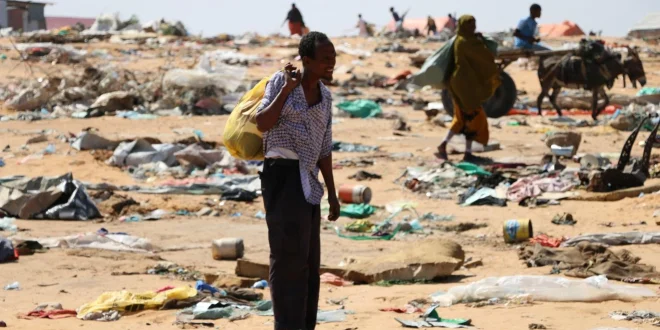
MOGADISHU — A report by the Heritage Institute for Policy Studies has found that forced evictions affected 2,136,420 people in Somalia between 2017 and September 2026, with the Benadir region, which includes the capital Mogadishu, accounting for 64 percent of the cases. Published in October under the title “Elite Capture of Urban Land in Mogadishu Eroding State Legitimacy,” the report draws on data from the Norwegian Refugee Council’s Evictions Information Portal.
The report stated that the proportion of evictions from displacement camps located on government-owned land in Mogadishu rose from 11 percent in 2021 to 44 percent in 2025. It reported that 143,548 people were evicted in the capital during 2025 and noted that about 120 families were evicted from the former Ministry of Health compound in July of the same year in an operation carried out by government authorities, according to the report.
The institute noted that many evictions are carried out without adequate notice, consultation with residents, or appropriate compensation. It warned of their humanitarian consequences, which include loss of shelter, family separation, and health risks. The report also recorded 84 protests against forced evictions in Somalia between April 2025 and March 2026, including 78 in Mogadishu, amid reports of arrests, injuries, and deaths during some confrontations.
The report attributed part of the crisis to overlapping responsibilities between the Benadir Regional Administration and the Ministry of Public Works, amid the absence of a clear framework defining the capital’s status and governance model. It stated that land disputes account for about 85 percent of cases before courts in Mogadishu, according to the data it cited, noting that lengthy proceedings and high litigation costs limit residents’ ability to claim and protect their rights.
The report discussed confrontations in Mogadishu in August 2026, including protests against home demolitions in the Tookiyo neighbourhood, during which about ten people were injured, according to local reports cited in the source. It also noted a call by the Union of Somali Scholars’ Councils for the government to halt demolitions, investigate residents’ complaints concerning land, and hold accountable anyone found responsible for abuse of power or corruption.
The Heritage Institute concluded that Mogadishu’s land crisis has come to affect public trust in institutions, the rule of law, and overall stability. The report warned that evictions carried out without fair legal procedures could deepen grievances exploited by Al-Shabaab for recruitment. It called for reforming land governance, clarifying institutional responsibilities, strengthening legal protections for residents, and improving transparency in land registration and property transactions.