Somali Observatory for Humanitarian Affairs The Voice of Reality.. The Eye of Humanitarian Truth in Somalia
Related Articles
The Federal Republic of Somalia is once again confronting a devastating drought crisis, described as one of the most severe in the country’s modern history, amid widespread international warnings of catastrophic humanitarian consequences resulting from three consecutive years of failed rains and a sharp decline in international relief funding; a situation that has left millions of citizens, particularly in regions like Puntland and southern and northern areas, facing complex and harsh survival choices to save their families and livestock, which form the vital backbone of the local pastoral economy in one of the world’s most vulnerable countries to ongoing climate shocks.
A journalistic report by the American news agency, Associated Press (AP), highlighted the profound tragedy experienced by pastoralists in Usgure village, Puntland; where Abdi Ahmed Farah, 70, lost most of his livestock after hundreds of his goats perished, leaving him with only 110 out of 680 goats barely clinging to life, which doubled his debts to purchase commercial water trucks and forced him to reduce his family’s meals—including his 22 children—to just one meal a day consisting of rice, sugar, and oil, while his wife, who gave birth to their youngest child three weeks ago, suffers from an inability to breastfeed due to severe nutrition shortages. Farah stated: “I have considered abandoning my family because I cannot provide for them.”
The field report noted that the current humanitarian crisis has been dramatically compounded by international aid cuts—most notably by the Trump administration, which has historically been Somalia’s top donor—coinciding with a sharp spike in global prices driven by the Iran war, as Somalia imports most of its fuel from the Middle East and nearly 70 percent of its staple food supplies from abroad, in addition to recording the lowest yield on record for staple crops like maize and sorghum during the past October-December rainy season, according to the Food and Agriculture Organization (FAO).
In a related context, UNICEF warned that nearly half a million Somali children face the risk of severe acute malnutrition—the harshest kind—a figure higher than the number of children requiring emergency treatment during the severe droughts of 2011 and 2022, while Hameed Nuru, the UN World Food Program (WFP) director for Somalia, confirmed that 2026 is the worst year on record for Somalia in terms of drought, noting with regret that children have already begun dying due to hunger.
Data from the latest Integrated Food Security Phase Classification (IPC) report released on Thursday revealed that nearly 6 million people currently face crisis levels of acute food insecurity, and although slightly lower than February estimates of 6.5 million (which represented a third of the population and a 25% increase since January), it exceeds previous projections of 5.5 million, placing suffocating pressure on aid agencies trying to maximize resources alongside financial support sent by the Somali diaspora to bridge the escalating relief gap.
Mohamed Assair, a manager with Save the Children in Puntland, explained the situation stating: “This drought is not just another cycle of dry season. It’s a repeated climate shock with shrinking humanitarian support,” which led to the collapse of the local economy in Usgure village, home to 700 families, where shops closed due to the lack of market for thin livestock. Abshir Hirsi Ali, a local community leader, noted that desperate families consumed contaminated rainwater from brief showers, causing outbreaks of fever, while Muhubo Tahir Omar (47, a mother of 11 children) explained that she sold her goats to pay for school fees, but when payments stopped, the teachers left the village, expressing deep fear for the future of the entire community.
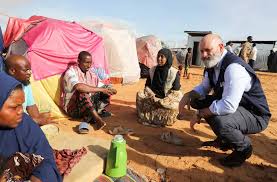
Decades of conflict and prolonged severe drought have displaced millions of people, with an additional 200,000 individuals forced to flee this year alone according to UN estimates. Kevin Mackey, the Somalia director for World Vision, stated that families trek through harsh landscapes for up to nine days to reach aid hubs in the southern town of Dollow, while other displacement camps, such as the one outside Shahda village in Puntland, face extreme shortages; Shukri (a 20-year-old mother of four) reported that children suffer from severe malnutrition and worsening diarrhea due to contaminated water and a lack of food rations. Other families fled to the capital, Mogadishu, including Fadumo (45, a mother of seven) who moved from Lower Shabelle after water sources dried up and livelihoods were threatened by Al-Qaeda-linked Al-Shabab militants.
For his part, Antoine Grand, head of the International Committee of the Red Cross (ICRC) delegation in Somalia, expressed deep concern over the outlook, noting that a drought of similar severity in 2022 received a donor response five times greater than current funding levels; aid funding to Somalia dropped sharply to $531 million in 2025 compared to $2.38 billion in 2022, creating a massive deficit.
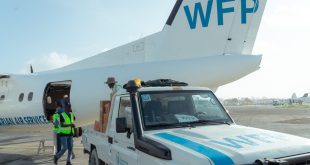
Concurrently, the WFP revealed it has reached only 300,000 people out of a targeted 2 million due to funding gaps, while therapeutic milk ran out at the hospital center in Qardho, Puntland, forcing nurses to resort to homemade alternatives like cow’s milk to treat severely malnourished children, including 4-year-old Farhia, who weighs a scant 7.5 kilograms with prominent bones under her skin after her family lost all their goats, according to her mother Najma, who expressed total despair about regaining their previous lives.
The current drought crisis places Somalia before a highly complex humanitarian and developmental test, clearly exposing the widening gap between accelerating, repeated climate shocks in the Horn of Africa and the dwindling financial commitments of major international donors. This reality underscores the urgent need for the Somali government, through its executive arm, the Somali Disaster Management Agency (SoDMA), to intensify diplomatic and relief efforts to save the most vulnerable populations, while formulating sustainable local, regional, and international strategies aimed at building community resilience, bridging funding gaps, and confronting compounded economic and environmental challenges to preserve human lives and dignity.