Somali Observatory for Humanitarian Affairs The Voice of Reality.. The Eye of Humanitarian Truth in Somalia
Related Articles

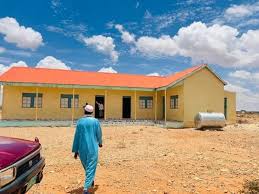
HARGEISA — In a new and painful chapter of the climate crisis gripping the Horn of Africa, the fallout from the current drought in Somaliland is severely impacting the education sector, threatening to derail the future of an entire generation. The Ministry of Education and Higher Training confirmed that the drought has led to the complete closure of approximately 150 schools across vast areas, including Togdheer, Sahil, Sool, and Sanaag, depriving over 14,457 students of their right to education.
Professor Ismail Duale Yusuf, the Minister of Education, described the drought’s impact as a “devastating blow” to educational institutions, particularly in the eastern regions. He explained that statistics show 260 schools have been directly affected by the drought, with almost half (150 schools) ceasing operations entirely, while the remaining schools are operating under “critical conditions threatened with closure at any moment.” Mogadishu Press reported these tragic developments.
Education Follows the Nomads: Mass Displacement Empties Villages
Field reports reveal a painful humanitarian reality: most families in these regions are pastoralists forced into mass displacement in search of water and pasture for their livestock. As residents migrate, classrooms automatically close and villages become nearly deserted. This was highlighted by the Minister in an interview with “BBC Somali,” where he stated: “Whenever drought hits an area, residents move with their livestock in search of water, and students leave with their families, causing schools to automatically close.”
This mass displacement not only threatens food security but constitutes a “silent catastrophe,” foreshadowing generations deprived of basic education, negatively impacting the social stability and developmental future of the region.
Calls for Urgent Intervention and Mobile Solutions
Given the weak infrastructure and the decline in rural families’ incomes, resuming the educational process has become extremely difficult. Experts warn of the situation worsening unless governmental and international bodies intervene with urgent programs to support the affected communities.
Humanitarian appeals emphasize the necessity of providing alternative and immediate educational solutions for displaced students, such as activating “mobile education” or establishing temporary learning centers, to ensure the continuity of a child’s right to education.
Press sources, relying on local reports such as Mogadishu Press, affirm that the current crisis is an extension of a severe climatic issue demanding a long-term response.