Somali Observatory for Humanitarian Affairs The Voice of Reality.. The Eye of Humanitarian Truth in Somalia
Related Articles

HARGEISA — The Government of the Republic of Somaliland has reaffirmed its commitment to expanding humanitarian assistance for internally displaced people through enhanced essential services and sustainable development initiatives aimed at improving living conditions for vulnerable communities, particularly displaced families, women, and children.
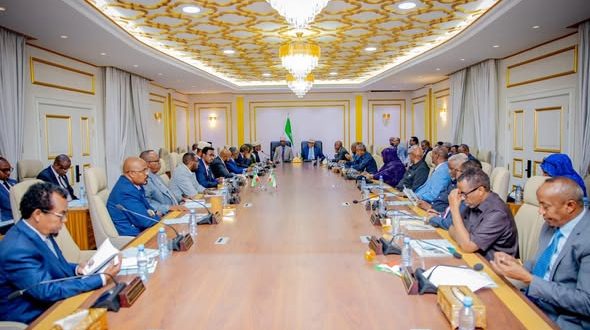
The commitment was highlighted during the 66th session of the Council of Ministers, chaired by President Abdirahman Mohamed Abdullahi (Irro) and attended by Vice President Mohamed Ali Aw Abdi. The Cabinet reviewed several national priorities, with particular emphasis on the humanitarian situation facing internally displaced persons and measures to strengthen the government’s response in cooperation with humanitarian and development partners.
During the meeting, the Minister of Resettlement and Humanitarian Affairs, Sulayman Da’ali Haji Jama, presented a comprehensive assessment of humanitarian conditions in displacement camps, noting that humanitarian needs continue to grow due to ongoing economic pressures and climate-related challenges. He stressed the urgent need to expand access to food assistance, safe drinking water, healthcare, sanitation, and education in order to alleviate the hardships facing thousands of displaced households and strengthen their resilience.
As part of these efforts, the Ministry of Resettlement and Humanitarian Affairs, in partnership with Qatar Charity, officially launched the construction of a new school at Naaso Hablood A (Qasaali) Internally Displaced Persons Camp. The project is intended to expand educational opportunities for displaced children by providing a safe and stable learning environment that supports their continued education despite the challenges of displacement.
The Minister described the initiative as an example of the importance of cooperation between government institutions and humanitarian organizations in implementing sustainable development projects. He praised Qatar Charity for its continued contribution to supporting vulnerable communities and emphasized that investment in education remains a fundamental pillar for building stronger, more resilient societies and promoting long-term social stability.
The Cabinet concluded by reaffirming that addressing internal displacement will remain a government priority through strengthened humanitarian response mechanisms, closer coordination with international partners, and increased resource mobilization to implement programs that combine emergency relief with durable solutions, ultimately improving essential public services, restoring livelihoods, and supporting the long-term recovery of displaced communities.
Internal displacement remains one of Somaliland’s most pressing humanitarian challenges, driven by recurrent droughts, climate-related shocks, and declining livelihoods. In recent years, government policies—supported by humanitarian partners—have increasingly focused on integrating emergency relief with long-term investments in education, healthcare, and essential services. This approach reflects a growing recognition that durable solutions are essential for strengthening community resilience, reducing long-term dependence on humanitarian assistance, and promoting sustainable and inclusive development.