Somali Observatory for Humanitarian Affairs The Voice of Reality.. The Eye of Humanitarian Truth in Somalia
Related Articles


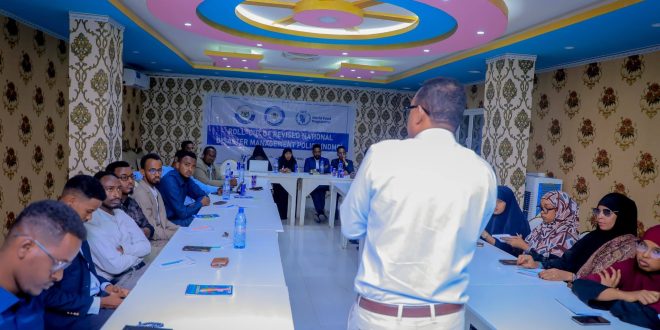
LAS ANOD — A specialized workshop focusing on the dissemination and implementation of the updated National Disaster Management Policy commenced today in Las Anod, organized by the Somali Disaster Management Agency (SoDMA) with broad participation from government officials, international partners, and humanitarian entities engaged in relief and risk management activities.
The two-day workshop aims to institutionalize the concepts of prevention, early preparedness, and rapid crisis response, while enhancing the capacity of government and community institutions to mitigate the country’s growing natural and humanitarian risks to protect the most vulnerable populations.
Speaking at the opening session, H.E. Eng. Mohamed Dirie Farah, Minister of Humanitarian Affairs and Disaster Management of the Northeastern Somalia State Government, stated that updating the national policy is an imperative response to current climate shifts and humanitarian pressures, aiming to transition from traditional relief models to proactive risk management and resilience building.
His Excellency explained that the new framework introduces advanced mechanisms to bolster coordination between government bodies and humanitarian organizations, alongside upgrading comprehensive early warning systems and expanding public awareness to safeguard lives, assets, and minimize human and economic losses within the state.
The event featured extensive discussions with representatives from ministries and agencies of the Northeastern Somalia State administration, alongside international organizations, to assess executive mechanisms for localized implementation and ensure the alignment of field operations and integration of roles for a more effective and sustainable humanitarian response.
On his part, Mohamed Mukhtar Ali, Advisor at the Somali Disaster Management Agency (SoDMA) and the workshop’s facilitator, noted that reviewing and updating the policy will directly enhance the efficiency of national preparedness frameworks and build a more resilient and equitable response to various crises.
The advisor and facilitator added that the upcoming phase will prioritize intensive efforts to embed a culture of prevention and risk reduction within state institutions and local communities, thereby strengthening the nation’s capacity to withstand successive humanitarian and environmental challenges while securing livelihoods.
These strategic interventions by the Somali Disaster Management Agency (SoDMA) come at a time when Somalia faces complex climate and humanitarian challenges, primarily driven by severe droughts, floods, and recurring displacement, making the shift toward resilience and sustainable readiness a mandatory path to securing local communities and mitigating the impacts of successive crises.