Somali Observatory for Humanitarian Affairs The Voice of Reality.. The Eye of Humanitarian Truth in Somalia
Related Articles

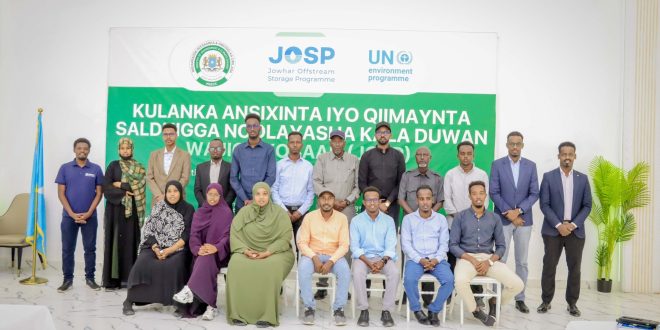
MOGADISHU — Strengthening environmental sustainability and protecting vital ecosystems, which form a fundamental pillar for food security and climate balance, H.E. Abdirisak Ahmed Ali, Director General of the Ministry of Environment and Climate Change of the Federal Republic of Somalia, launched the validation meeting for the first phase of the Biodiversity Baseline Assessment (JOSP) in Mogadishu.
During his opening remarks, the Director General praised the executive steps and field efforts undertaken in collecting accurate scientific data, emphasizing that this project represents the cornerstone for building a comprehensive national strategy to protect wildlife and address the accelerating environmental challenges in the region.
The meeting witnessed wide participation from all stakeholders in the environment and climate change sectors at both national and federal levels, in addition to representatives from civil society organizations and academia, ensuring the formulation of a unified and comprehensive vision for the future of the country’s natural resources.
During the sessions, participants reviewed detailed assessment findings covering organisms and environmental diversity in the first phase, where extensive consultations took place with active partners to ensure alignment of this data with national needs and international environmental conservation commitments.
In-depth discussions were held with key stakeholders to enhance their participatory role in the final validation process of the collected data, ensuring its accuracy and comprehensiveness as a reference database for policymakers and researchers in environmental and climate fields.
The meeting concluded with a series of consensus recommendations and prioritized actions that will serve as a roadmap to guide the second phase of the Biodiversity Assessment, ensuring the continuity of work based on sound scientific and methodological foundations to achieve desired goals.
The Ministry of Environment and Climate Change reaffirmed its commitment to continuing intensive efforts to protect the Somali environment, stressing the importance of strengthening partnerships between government institutions, the private sector, and the international community to integrate the implementation of major environmental programs.
The Ministry’s commitment also included working to strengthen cooperation with all partners to implement initiatives aimed at building the capacities of local communities and environmental institutions, enabling them to adapt to climate change impacts and protect natural habitats from degradation.
Through these projects, the Ministry strives to achieve the “Green Somalia” vision by planting trees, combating desertification, and protecting biodiversity, which enhances the state’s resilience against environmental crises and supports sustainable livelihoods for citizens.
This assessment is a significant proactive step that places Somalia on the global environmental action map, as the validated data contributes to improving the management of nature reserves and drafting effective policies to reduce biodiversity loss and ensure resource sustainability for future generations.
The validation of biodiversity data in Mogadishu represents a Somali message of commitment to protecting the legacy of nature for future generations. Amidst climate challenges, the will for change towards a green and sustainable future is born, affirming that environmental preservation is not merely an option but an absolute necessity for ensuring stability and prosperity across the Horn of Africa.