Somali Observatory for Humanitarian Affairs The Voice of Reality.. The Eye of Humanitarian Truth in Somalia
Related Articles
Amid volatile climatic shifts striking the Horn of Africa, Somalia faces a tragic new chapter of human suffering. The search for a drop of water has evolved into a daily epic for survival, amidst the silence of the wilderness and the groans of camps crowded with thousands fleeing the fangs of drought and the relentless living conditions that have spared nothing.
The humanitarian crisis is escalating alarmingly on the outskirts of the Somali city of Garowe, the capital of Puntland, where hundreds of displaced pastoralists face extremely harsh living conditions resulting from total food insecurity and a lack of water suitable for human consumption, according to a field report by “Al-Araby Al-Jadeed” on the repercussions of climate change.
The failure of rainy seasons for four consecutive periods led to a comprehensive collapse in the pastoral sector and the massive death of livestock, which represented the sole economic resource for these families. This forced them into displacement toward urban centers in search of survival amid unprecedented environmental and economic degradation that struck the roots of their traditional lives.
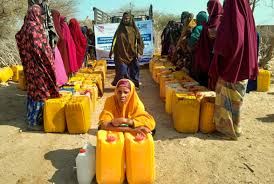
In the “Jallab” camp, painful testimonies emerged from mothers struggling in a daily battle to provide a few liters of saline water for large families, amid a total financial inability to purchase fresh water from commercial tankers that exploited this scarcity to raise prices to record levels, far beyond the reach of those who lost all their possessions.
In a vivid embodiment of the depth of this humanitarian catastrophe, sources recount heart-wrenching stories, including that of the displaced Abshiro Mohamed, whose young daughter fainted from hunger and thirst. This reflects a tragic transformation of pastoralist communities from productive, independent forces into vulnerable families relying on intermittent aid.
The report published in “Al-Araby Al-Jadeed” emphasizes that families are forced by necessity to use saline and undrinkable well water as the only available option. The price of a water barrel in some areas has reached approximately two dollars, an unattainable fortune for families who cannot even find the necessary food to satisfy their children’s hunger.
These displaced persons also suffer from fragile shelter and a lack of privacy, residing in primitive huts constructed from worn-out plastic and tattered fabrics that offer no protection from the scorching sun or the biting cold of the night, amid a near-total absence of basic health services and urgent relief interventions from international organizations.
Across the border, the tragedy extends its heavy shadow over the “Dadaab” camps in Kenya, where over a hundred thousand Somali refugees suffer from acute thirst due to technical failures in the main boreholes supplying the camp. This has halted basic life activities and dramatically worsened the suffering of women and children.
The acute water scarcity has caused the cessation of simple professions that represented a glimmer of hope for refugees, such as laundry and manual construction work. This has plunged families into a dark cycle of accumulated debt and extreme poverty, as securing water now consumes all the time and effort of heads of households.
Persons with disabilities and the elderly face doubled physical and psychological challenges, with some forced to walk for long hours despite their injuries in search of alternative water sources. Medical warnings cited by “Al-Araby Al-Jadeed” highlight the imminent risk of deadly outbreaks like cholera due to lack of hygiene and contaminated water.
For their part, local authorities in the Garowe municipality admitted their limited capacities and resources in the face of the increasing human influx and immense needs, appealing to the international community and donors for immediate intervention to prevent an all-out humanitarian catastrophe that could lead to irreparable loss of life.
In a related context, the United Nations World Food Programme warned that Somalia is currently undergoing one of the most complex and dangerous hunger crises in its modern history, resulting from the intersection of harsh climate change, ongoing armed conflicts, and a sharp decline in global humanitarian funding for the region.
International early warning systems confirm that current food and water security indicators are following the path of previous major famines. This necessitates an urgent and coordinated international response that moves beyond emergency aid toward building radical, sustainable solutions to ensure the long-term stability of these stricken communities.
The continuation of the water crisis in Somalia puts the international community’s conscience to a true moral and civilizational test. While the world’s progress accelerates, innocent souls wither behind camp walls waiting for a drop of water, mandating the formulation of a comprehensive international water security strategy that ensures human dignity and the fundamental right to life.