Somali Observatory for Humanitarian Affairs The Voice of Reality.. The Eye of Humanitarian Truth in Somalia
Related Articles



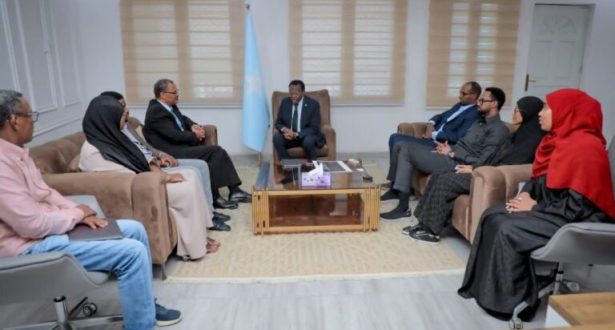
MOGADISHU — In a strategic step reflecting the profound link between environmental sustainability and livelihood stability, H.E. General Bashir Mohamed Jama, Minister of Environment and Climate Change, convened a high-level meeting with Mr. Hameed Nuru, WFP Country Director, to discuss mechanisms for addressing accelerating climate challenges.
The talks held in Mogadishu focused on aligning national environmental policies with international humanitarian initiatives to formulate a proactive response to global climate shifts, as reported by the Somali National News Agency (SONNA).
Both leaders prioritized robust climate adaptation strategies, emphasizing that environmental degradation poses a direct threat to national food security and the stability of livelihoods for millions across the Horn of Africa.
The same source indicated that the dialogue analyzed the operational impacts of environmental shifts, specifically the patterns of recurring droughts and flash floods, which remain primary drivers of internal displacement and escalating humanitarian crises.
The Minister and the UN official reaffirmed, according to the national agency, the necessity of building a field alliance integrating technical expertise and logistical resources to ensure pre-emptive crisis management and transition relief work toward sustainable development.
The engagement solidified the operational partnership between the Ministry of Environment and the WFP, renewing their mutual commitment to executing initiatives aimed at protecting lives and preserving the fragile ecological balance in high-risk areas.
This partnership seeks to exchange data and technical expertise to empower local communities against future shocks by equipping them with the tools necessary to adapt to new environmental realities and secure their growth resources.
Discussions also touched upon the importance of investing in green infrastructure and projects enhancing soil and water resource sustainability, ensuring reduced economic consequences from climate shocks and a gradual transition toward self-sufficiency.
Participants emphasized that climate protection is an existential battle requiring unified national and international efforts, highlighting the Ministry’s pivotal role in leading this sovereign file in coordination with active global partners.
The meeting concluded by establishing a practical framework for periodic follow-up, ensuring that understandings are transformed into a tangible reality that consolidates food security based on a healthy and sustainable environment.
This strategic alliance between the Ministry of Environment and the WFP represents a “paradigm shift” in climate crisis management in the Horn of Africa. Linking environmental protection with food security provides a fundamental solution to cycles of drought and poverty. According to observers, the success of this path will pave the way for transforming Somalia from a climate-impacted nation into a regional model of adaptation and environmental citizenship, ultimately enhancing long-term social and economic stability.