Somali Observatory for Humanitarian Affairs The Voice of Reality.. The Eye of Humanitarian Truth in Somalia
Related Articles


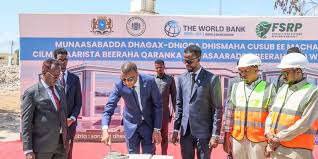
MOGADISHU — In a strategic move towards bolstering national food sovereignty, His Excellency the Prime Minister of Somalia, Hamza Abdi Barre, today laid the foundation stone for the National Agricultural Research Center (NARC). This new center represents a genuine turning point, aiming to become an advanced scientific reference for developing local production, which will directly contribute to enhancing food security and reducing dependence on imports. Mogadishu Press reported that this step reflects the government’s commitment to fighting hunger.
This ambitious project is part of Somalia’s contribution to the Food System Resilience Program in Eastern and Southern Africa, funded by the World Bank with $150 million dedicated to supporting vital national projects. The three-story building, which will house 19 offices, eight laboratories, and two agricultural training sections, is expected to be completed within 12 months, providing advanced research infrastructure.
Agriculture is the Backbone of Human Development
Prime Minister Barre emphasized that the Center will play a pivotal role in developing Somali scientific competencies and solidifying the national concept of self-sufficiency. He stated: “Our land is fertile, our water is sufficient, and we have the capacity for self-sufficiency, but we need to focus our efforts on local production,” adding that agriculture is the backbone of the national economy, and boosting local production is essential for confronting concerns related to food security and the lives of citizens.
For his part, the Minister of Agriculture and Irrigation, Mohamed Abdullahi Hayir, clarified that rebuilding agricultural research capabilities is vital to compensate for institutions destroyed during years of conflict, and more importantly, to adapt to climate change that threatens agricultural output and the livelihoods of farmers.
The Minister added that the Center will conduct research on priority crops, livestock, climate adaptation, and will also develop new crop varieties and manage the national seed stock, thereby connecting university research with national institutions.
Direct Beneficiaries: Empowering Small Farmers
Somali farmers will feel the direct impact of this center. They will benefit from applying scientific research findings on their farms, such as adopting improved, drought and pest-resistant farming systems, and using enhanced, high-yield seeds. They will also receive continuous practical training and technical guidance, which will enhance their ability to increase agricultural productivity and ensure crop sustainability in the face of climate challenges.
Officials believe, as confirmed by Mogadishu Press, that this project represents a crucial step toward modernizing the agricultural sector and reducing the country’s reliance on food imports, thereby contributing to enhanced food security and long-term local production sustainability, which is an investment in human dignity.