Somali Observatory for Humanitarian Affairs The Voice of Reality.. The Eye of Humanitarian Truth in Somalia
Related Articles


The famous Somali poet and Darwish warrior, Ismail Mire, explored these themes in his celebrated poem “Kibir” (Arrogance). The term describes the hubris of a powerful individual whose vanity leads them to oppress others without justification. Following the British Empire’s defeat of the Darwish movement—after a resistance lasting twenty-one years—Mire found himself at the mercy of a British collaborator named Carab Dheere. When Dheere demanded a poem in his praise, Mire famously refused. Having addressed the leader of the Darwish uprising as “Sayyid,” Mire argued that his lips would never address an invading “infidel” as “Sir.” Despite the threat of incarceration, Mire instead recited a poem detailing the downfall of historical tyrants, predicting that Carab Dheere would meet a similar fate. History records that Mire’s grim prophecy for his oppressor was realized only a few days later.
Historically, Somalis were renowned for standing up to injustice. They invariably protected individuals or clans seeking refuge from conflict or natural disasters—a noble code of conduct known as “Gobannimo.” Conversely, any failure to protect the weak was considered ignoble, termed “Gunnimo.”
Unfortunately, this traditional nobility is in short supply today, as illustrated by the unfolding humanitarian disaster in Las Anod, the capital of the Sool region.
The Somali civil war forced many from southern clans to flee their home regions. These displaced people, largely skilled farmers and tradesmen, contributed significantly to the economies of their host communities. Las Anod welcomed these refugees, many of whom lived there for over twenty years, raising families and becoming an integral part of the local social fabric.
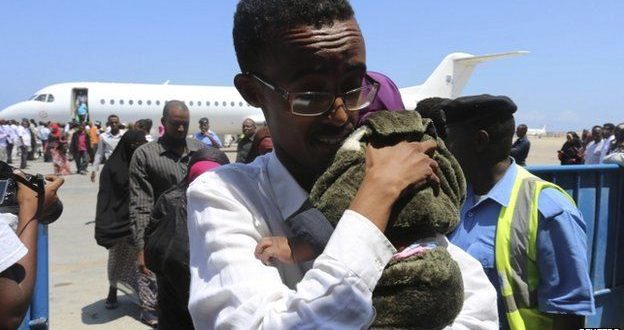
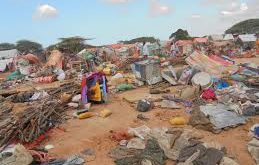
However, on October 2nd, the Somaliland administration began rounding up hundreds of these residents, loading them onto trucks, and deporting them across the border to Puntland. This operation was conducted without advance notice, resulting in the chaotic separation of children from their parents. Deportees were forced to abandon their possessions, farms, and businesses; masons left buildings unfinished, and employees lost their wages. Heartbreaking reports emerged of pregnant women giving birth in the desert without medical care. These scenes mirrored the widely criticized family separation policies seen at the U.S.-Mexico border or the chaotic evacuations in Afghanistan, albeit on a different scale.
These flagrant human rights violations were perpetrated by the leadership of the separatist entity of Somaliland, which has occupied Las Anod by force since October 2007 against the wishes of the city’s unionist clans. The traditional leaders of Sool, currently refugees themselves in neighboring Puntland, have expressed horror at these actions against the very people they had welcomed long before the Somaliland occupation began.
The Somaliland administration attempted to justify these cruel measures by accusing the deportees—without evidence—of being behind a spate of targeted assassinations. These mysterious murders, which began in 2010, have claimed over eighty lives. The most recent killing sparked a local uprising and calls for the eviction of Somaliland security forces, who have consistently failed to solve these crimes. The deportees, meanwhile, were granted no legal recourse to contest their sudden expulsion.
The decision to deport Southwestern Somalis was made arbitrarily by Interior Minister Mohamed Kahin and security heads, utilizing the British-funded Rapid Response Unit (RRU). This unit is frequently deployed against dissenters, such as the unionist humanitarian worker Abdimalik Coldoon. Recently, these forces were also used to ship eighteen teenage girls from Las Anod to a prison in Berbera—where summer temperatures are extreme—simply for celebrating Somali National Day and waving the blue national flag.
Somaliland appears to seek two strategic goals through these deportations:
- To suppress the nascent uprising in Las Anod, where locals are exhausted by recurring murders, the incarceration of pro-unity youth, and a lack of development compared to other regions.
- To provoke retaliation in the South against Northerners. By inciting a cycle of deportations, the administration hopes to stem the flow of unemployed youth moving to Mogadishu for opportunities, thereby maintaining their separatist narrative.
While Sool’s traditional and religious leaders have condemned these actions, it was a shock to hear former Speaker Jawari and the Somali Prime Minister accuse the people of Sool of condoning these expulsions. In reality, the people of Sool are living under occupation with no administrative say in their own cities.
The Federal Government of Somalia (FGS) in Mogadishu has proven unable to protect these deportees. Hamstrung by international constraints and a perceived lack of political will, the FGS has failed to challenge Somaliland’s moves toward disintegration. The people of Sool, Eastern Sanaag, and Ayn have remained patient, hoping for recognition as a Federal Member State, yet they feel abandoned by the FGS. Even President Farmajo famously declined to address the fate of these regions during a public forum. Furthermore, Prime Minister Roble’s call for unarmed citizens to “stand up” against a well-armed, determined security apparatus has been viewed as deeply unrealistic.
The deportation of displaced Somalis is an affront to the core values of the people of Las Anod. This callous act was undertaken by the Somaliland administration without the consent or participation of the local population. It remains the hope of the victims that the international community and the Federal Government will eventually hold the perpetrators accountable for this inhumane misdeed.