Somali Observatory for Humanitarian Affairs The Voice of Reality.. The Eye of Humanitarian Truth in Somalia
Related Articles


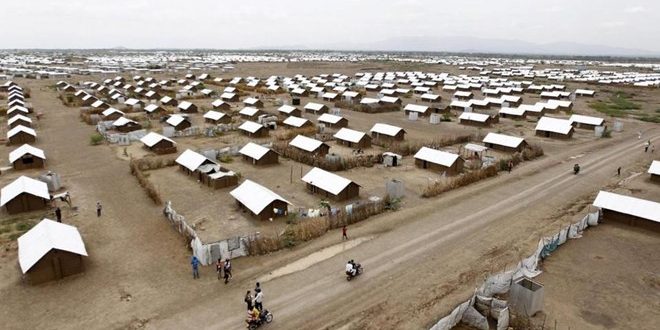
DADAAB (SoOHA) – Ibrahim Mohamed Mukhtar, 28, is running a thriving photography business in northeastern Kenya’s Dadaab camp and employing four other Somali refugee youth.
Having lived in Dadaab since he was a baby, and coming from a poor family, Ibrahim started making a name for himself as a photographer after leaving primary school in 2017.
“I bought my first camera for $300 on credit from a local shop owner who allowed me to pay in installments,” Ibrahim told Radio Ergo.
Spotting a gap in the market, he starting charging just 10 shillings a photo to draw in the customers.
“I used to walk around the suburbs of Dadaab meeting people and taking their photos. At that time I was alone and people were getting to notice my work,” he explained.
Two years on, he has invested $2,800 in four cameras and two computers to process the pictures. He makes enough to pay his staff and still put away Ksh 500 a day in savings. He can comfortably support his mother and siblings, and his wife.
“I don’t need resettlement abroad or a job working for someone else,” Mukhtar said. “I also get constant encouragement from my wife and my life has dramatically improved100 per cent.”
There are 16 young refugees working in photography in the camp and the nearby town.
Ali Abdi Mohamed, 23, is winding up at Waberi Secondary School and working with two friends. They earn around Ksh 70,000 a month as photographers. Ali began posting his photos on social media.
“I had the ambition to be a photographer. I had been using my phone until someone gave me a camera as a present. That is when I officially started this work. As time went by I managed to buy another camera,” he told Radio Ergo.
Ali hopes to pay his way to university next year and wants to become a professional photographer.
“This work has given me hope. I want to pursue it further to fulfill my dream. Hopefully, I can make a living from this work,” he said.
The entrepreneurial spirit of these young photographers is appreciated by Hassan Osman, the chairman of Hagadera camp in Dadaab.
“The lives of these young people have changed for the better. They have also contributed to improving the standard of living of their families. There are many who are facing unemployment as the aid agencies have laid off many young people because of the repatriation,” he said.
Source: Radio Ergo