Somali Observatory for Humanitarian Affairs The Voice of Reality.. The Eye of Humanitarian Truth in Somalia
Related Articles


BENGHAZI – In a move reflecting growing institutional attention to the protection of Somali citizens abroad, the Independent Human Rights Committee of Somalia conducted a field visit to Qanfouda Prison in Benghazi, eastern Libya, to assess the conditions of Somali citizens being detained there, review their humanitarian and legal circumstances, and hear their needs and concerns. The visit forms part of the committee’s efforts to strengthen the protection of their rights and follow up on their cases with the relevant Libyan authorities. It also comes within the committee’s broader efforts to intensify its engagement with issues affecting Somali citizens along migration and transit routes, particularly those facing exceptional circumstances outside the country.
The delegation was headed by the committee’s Deputy Chairperson, Mohamed Haroun Mahmoud, accompanied by Commissioner Ali Mohamed Alami. During the visit, the delegation met with a number of detained Somali citizens and held discussions with Qanfouda Prison officials to assess detention conditions, available services, and procedures related to the detainees’ legal cases. The committee said the visit was intended to gather direct information to help assess the situation and follow up on relevant cases, while also strengthening communication channels with Libyan institutions concerned with the matter, allowing rights and humanitarian cases to be addressed in a more organized and sustained manner.
The committee reported that around 70 Somali citizens are currently detained at Qanfouda Prison, including eight women, one of whom is accompanied by her three-year-old daughter. The figures highlight the complex humanitarian dimension of detention linked to irregular migration, particularly when women and children are involved and require protection and care arrangements suited to their circumstances. The delegation listened to detainees’ accounts of their living conditions, available services, and the challenges they face, seeking to develop a more comprehensive assessment of their needs and follow up on possible measures with the relevant authorities.
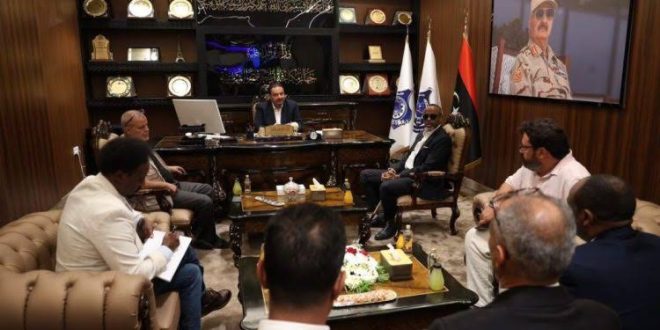
During meetings held as part of the visit, Major General Salah Mahmoud, head of Libya’s Anti-Illegal Migration Agency, said that around 300 Somali citizens are detained in prisons across eastern and southern Libya, including those held at Qanfouda Prison in Benghazi. The meetings underscored the importance of continued coordination between Somali and Libyan institutions in addressing the conditions of detained Somali citizens, particularly amid the complexities of migration management and the involvement of multiple authorities. Representatives of the Libyan Council for Human Rights and Public Freedoms also took part in the visit and expressed their readiness to continue monitoring the conditions of Somali detainees and exchange information and updates with the Somali committee regarding their cases.
The committee stressed that protecting Somali citizens abroad represents an important part of its mandate and that addressing migration and detention cases requires a combination of rights monitoring, institutional coordination, and legal and humanitarian support. In this regard, it emphasized the importance of ensuring detainees’ fundamental rights, including dignified treatment, access to healthcare, and communication with relevant authorities, while following up on their legal status and seeking to facilitate related procedures in accordance with applicable laws and humanitarian obligations. The committee also considers that establishing permanent communication channels with Libyan institutions could contribute to addressing such cases more effectively.
The latest efforts come as Libya remains one of the main transit points for migrants from the Horn of Africa and other parts of the continent seeking to reach Europe through irregular and often dangerous routes. These groups face multiple challenges related to detention, access to legal protection, exploitation, and human trafficking, making cooperation among states and human rights institutions an important element in protecting migrants and addressing their circumstances. Against this backdrop, stronger Somali-Libyan cooperation could provide a more structured framework for monitoring Somali citizens, exchanging information about their cases, and supporting legal and humanitarian solutions that safeguard their dignity and rights.
The issue of Somali citizens detained in Libya forms part of broader challenges associated with irregular migration across the Horn of Africa and North Africa, where economic, social, and security factors drive some young people to undertake highly dangerous migration routes in search of better opportunities. As Libya has become a major transit point toward Europe, the need has grown for stronger coordination among states and human rights institutions to address migrants’ circumstances in a manner that takes both legal and humanitarian considerations into account. In this context, the field visit by Somalia’s Independent Human Rights Committee highlights the importance of direct monitoring of citizens abroad and underscores the need for sustained institutional cooperation with Libyan authorities and rights partners to protect detainees, particularly women and children, strengthen access to legal and humanitarian assistance, and establish a more effective approach to safeguarding the rights of Somali citizens wherever they are.