Somali Observatory for Humanitarian Affairs The Voice of Reality.. The Eye of Humanitarian Truth in Somalia
Related Articles
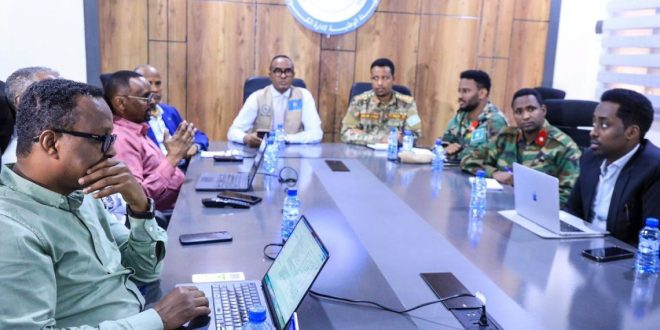
MOGADISHU – In a strategic move aimed at unifying national efforts and strengthening Somalia’s ability to respond to disasters and humanitarian crises, Chairman of the Somali Disaster Management Agency (SoDMA), Mohamud Moallim Abdulle, held an extensive meeting on Monday with the Commander of the Somali National Army Ground Forces, Brigadier General Sahal Abdulle Omar (General Khaled), at the agency’s headquarters in Mogadishu. The two sides discussed ways to enhance institutional cooperation and strengthen joint coordination to address emergency challenges related to natural disasters and climate change.
The meeting was held as part of efforts to reinforce Somalia’s national response system by expanding cooperation between civilian institutions and security agencies, ensuring rapid intervention in areas facing exceptional humanitarian conditions or sudden natural disasters. Both sides emphasized the importance of shifting from a traditional response-based approach toward a proactive strategy centered on advance planning, early monitoring, and information sharing to reduce potential human and material losses.
The discussions also addressed the potential impacts of the El Niño phenomenon and the severe climate changes that may accompany it, particularly the possibility of increased heavy rainfall and flooding in several Somali regions. SoDMA highlighted that the logistical resources and field capabilities of the National Army represent a significant component in supporting evacuation operations, rescuing affected populations, and delivering urgent humanitarian assistance to remote and high-risk communities.
The meeting further explored the importance of strengthening integration between SoDMA technical teams and relevant security institutions to improve humanitarian operations and ensure timely assistance reaches affected communities. Officials noted that previous experiences with droughts, floods, and internal displacement have demonstrated the urgent need for stronger national coordination capable of managing recurring crises in an organized and effective manner.
SoDMA affirmed that cooperation with the National Army is part of a broader national vision aimed at establishing an integrated risk management system based on early preparedness, stronger rescue capabilities, and improved institutional readiness to handle emergencies. The agency stressed that addressing climate-related impacts requires collective efforts involving government institutions, local authorities, affected communities, and humanitarian partners.
Observers believe that the partnership between SoDMA and the National Army represents an important development in Somalia’s crisis management approach, reflecting a move toward a model focused on prevention and risk reduction rather than merely responding after disasters occur. They note that stronger institutional cooperation can help protect communities, particularly in rural and remote areas that are often the most vulnerable to natural hazards.
Analysts also pointed out that climate challenges have become among Somalia’s most pressing national concerns, with repeated droughts, floods, and their direct effects on food security and livelihoods affecting millions of people. They emphasized that strengthening early warning systems, expanding training programs, and improving humanitarian response capacity are essential steps toward building a more resilient society capable of confronting future crises.
SoDMA continues to strengthen cooperation with various state institutions to establish a more comprehensive and effective national disaster management and humanitarian response system. These efforts form part of a long-term approach focused on protecting citizens’ lives, reducing disaster impacts, and supporting local communities in facing growing environmental and climate challenges.
Disaster management and climate adaptation remain among Somalia’s most significant national priorities, as the country has experienced repeated crises over recent decades, including severe droughts, floods, displacement, and declining natural resources. With the increasing global impact of climate change, the need has become more urgent for strong national institutions capable of anticipating risks and responding effectively. The partnership between SoDMA and the National Army represents an important step toward integrating civilian and security capacities in addressing emergencies and strengthening the concept of shared responsibility in protecting citizens and national assets. These efforts demonstrate that building a disaster-resilient state depends not only on the scale of response during crises, but also on the strength of planning, preparedness, and coordination before disasters occur, laying stronger foundations for stability and sustainable development in Somalia.