Somali Observatory for Humanitarian Affairs The Voice of Reality.. The Eye of Humanitarian Truth in Somalia
Related Articles

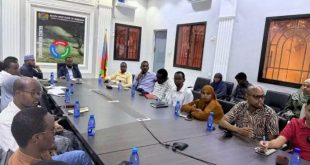
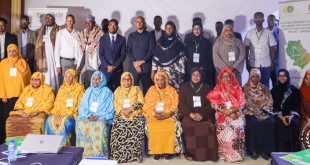
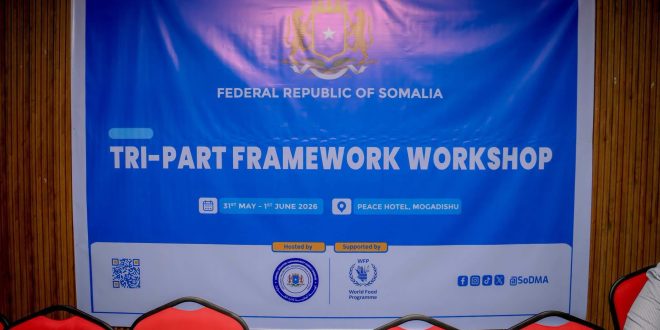
MOGADISHU — Somalia has engaged in shaping a unified institutional strategy to protect her humanitarian security, as the capital, Mogadishu, hosted a high-level workshop to extensively examine the “Tri-Part Framework” for crisis management, featuring broad participation from leaders of the Somali Disaster Management Agency (SoDMA), regional relief ministries, and the Banadir Regional Administration.
This national platform, hosted by the agency in technical coordination with the United Nations World Food Programme (WFP), comes within the context of a long-term restructuring of internal operational mechanisms, aiming to crystallize proactive response plans capable of mitigating the harsh impacts caused by severe natural and climate-induced disasters.
The official Facebook page of the Somali Disaster Management Agency reported that participating delegations praised the continuous leadership movements driven by the agency to modernize the relief ecosystem, emphasizing that the nature of contemporary environmental crises demands moving beyond fragmented efforts toward close structural coordination between the federal government and regional states.
The planning discussions during the sessions focused on dismantling key obstacles facing aid delivery channels, upgrading early warning systems, and ensuring a balanced geographical distribution of emergency supplies, thereby paving the way for an integrated, flexible strategy that responds efficiently to complex and unforeseen emergencies.
For his part, Dr. Ismail Jimale, Head of Project Unit at SoDMA, stressed the critical importance of operationalizing this unified coordination framework, noting that harmonizing plans and aligning visions among various local and international partners serves as the primary guarantee to maximize field intervention efficiency and safeguard vulnerable local communities.
At the conclusion of the deliberations, participants agreed on a package of executive recommendations that establish a clear roadmap for humanitarian action, focusing on anchoring institutional capacity across regional states and developing shared national databases to monitor environmental hazards, in alignment with the country’s sustainable development and overall social stability.
Somalia faces a highly fragile climate and humanitarian reality dictated by the harsh succession of severe droughts and sudden floods, placing a heavy burden on her emerging infrastructure. The transition toward adopting the “Tri-Part Framework” marks a qualitative shift toward ending traditional, fragmented patterns of relief management and distribution. By institutionalizing horizontal and vertical coordination between the central government and federal states, and with the backing of international partners like the WFP, Somalia seeks to transition from reactive crisis management into a proactive, smart prevention framework, thereby ensuring the protection of lives, assets, and long-term social stability.