Somali Observatory for Humanitarian Affairs The Voice of Reality.. The Eye of Humanitarian Truth in Somalia
Related Articles
Reuters reported in a recent field report that the military tension between the United States and Israel on one side and Iran on the other has led to catastrophic consequences for the humanitarian situation in Somalia, with thousands of children facing immediate danger due to broken food supply chains.
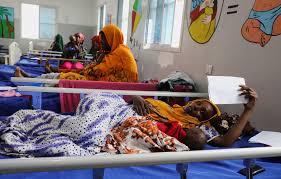
The report explained that Somalia, suffering from severe drought and a lack of international aid, is experiencing a health emergency, with half a million children under the age of five suffering from acute malnutrition, which the report described as a “matter of life and death.”
The agency pointed out that shipping disruptions resulting from the war in Iran have exacerbated the food shortage crisis, forcing health centers and clinics to ration available food portions and refuse new admissions due to the lack of supplies.
In a statement, Hassan Yahye Kheyre, a nurse working at a health center, said: “Since the needs are large and we don’t have a lot of supplies, we have had to keep reducing the amount we give children.”
Nurse Kheyre added, warning of health consequences: “If treatment is on-and-off, the children will become very weak, physically and mentally. And it may not be possible to reverse it.”
On the level of direct humanitarian suffering, the report highlighted the story of Muumino Adan Aamin, a mother of nine, who faced great difficulties in obtaining therapeutic peanut paste for her 11-month-old daughter, Ruweido, having been turned away from the clinic twice due to stockouts.
The mother recalled her previous suffering, saying: “Just bone and skin,” referring to her previous child who survived the 2017 drought thanks to this therapeutic food, expressing her fear of the same fate for her current children.
For her part, Shukri Abdulkadir, International Rescue Committee (IRC) Somalia coordinator, explained that the shipment of peanut paste that would have fed over 1,000 children has been stuck for two months in the Indian port of Mundra due to port congestion caused by diverted shipping routes in the Gulf.
According to CARE International, shipping and manufacturing costs have increased significantly; the cost of a single carton jumped from $55 to $200, which has reduced the organization’s ability to secure children’s needs, as a single order now only covers 83 children instead of 300.
Mohamed Omar, head of Health and Nutrition at Action Against Hunger (ACF) in Mogadishu, reported that the delivery time for therapeutic food shipments from Europe to Somalia has increased from 35 days last year to between 55 and 65 days currently.
Global hunger monitoring (IPC) data indicates that more than two million Somalis are now in the “Emergency” phase, one level before famine, with a 35% increase in admissions of malnourished children to ACF centers compared to last year.
At Daynile General Hospital, Xafsa Ali Hassan, health and nutrition supervisor, confirmed that the children’s health status is tangibly deteriorating, stating: “Some children’s nutritional status has already worsened” due to supply cuts.
Shukri Abdulkadir, IRC coordinator, commented on the scale of the impact, saying: “Somalia is really hard hit by the Iran war because people are still reeling from the impact of the previous drought. It’s very difficult for people to absorb these shocks.”
The report concluded by noting that the United Nations Office for the Coordination of Humanitarian Affairs (OCHA) has revealed the closure of more than 200 health facilities, warning that the number of children who could be denied treatment could rise to 150,000 if current funding gaps persist.
The current crisis in Somalia is a painful manifestation of the overlap between geopolitical crises and environmental challenges, where Somalia is not a party to regional conflicts but pays the price with the lives of its children. The international community’s failure to secure funding that does not exceed 14% of the required response plan, combined with the disruption of relief logistics, imposes an urgent need to reorder global humanitarian priorities, away from profit and loss calculations, to save a whole generation from repercussions that threaten its existential future.