Somali Observatory for Humanitarian Affairs The Voice of Reality.. The Eye of Humanitarian Truth in Somalia
Related Articles

Escalating Humanitarian Crisis
Amidst highly complex humanitarian conditions, millions in Somalia face the specter of hunger threatening livelihoods and stability, amid urgent international calls to rectify the situation before the region slides into an unprecedented food catastrophe.
The latest data from the Integrated Food Security Phase Classification (IPC) revealed an alarming rise in the number of people facing acute food insecurity, with figures doubling to reach approximately 6.5 million people.
Climate and Conflict Challenges
The report indicates that hunger levels have escalated due to a combination of harsh factors, most notably worsening drought waves, ongoing conflicts, and the sharp rise in basic food prices locally and globally.
In a painful humanitarian scene, more than 1.8 million children under the age of five face the risk of acute malnutrition, including approximately 483,000 children suffering from severe acute malnutrition (SAM), the deadliest form for young lives.
Displacement and Livelihood Disruption
Experts explained that the situation is worsening in central and southern regions and parts of the north, where conflicts and competition over resources have led to large-scale population displacement, disrupting access to markets and livelihoods.
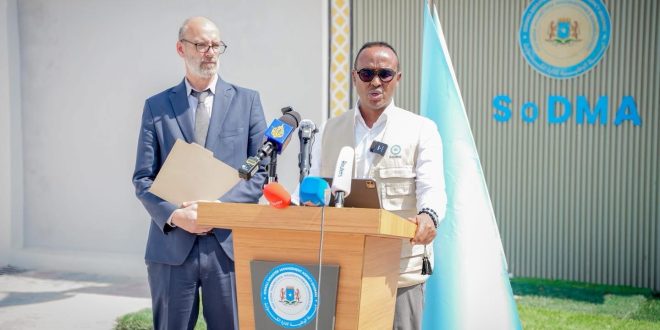
For his part, George Conway, the UN Humanitarian Coordinator for Somalia, stressed that the drought emergency has deepened alarmingly, noting the significant rise in water prices, food supply shortages, and livestock deaths.
Call for Urgent Response
Conway added that life-saving humanitarian assistance is an absolute necessity in the coming months, especially with no rainfall expected before the main “Gu” season, which runs from April to June.
In turn, Mohamud Moallim Abdulle, Chairman of the Somalia Disaster Management Agency (SoDMA), described the severity of the current drought as undeniable and deeply alarming, calling on international partners and the private sector to scale up immediate support.
Funding Gaps and Recovery
The report stated that significant gaps in humanitarian aid funding have forced partners to reduce or suspend vital programs, covering health, nutrition, water, and sanitation sectors, exacerbating the suffering of those affected.
Despite expectations of average rainfall in the second quarter of the year, the report warns that recovery from the effects of the extreme drought will take a long time, and millions of people will remain at risk.
Vision for Sustainable Stability
UN agencies and the Somali government urged the need to intensify international coordination to provide an integrated response combining food security, healthcare, and improved water services to ensure aid reaches those in need.
The report concluded with the need to invest in strengthening local communities’ resilience to climate shocks, focusing on rural and marginalized areas where high levels of acute malnutrition intersect with insecurity.
These warnings come at a time when Somalia is striving to overcome decades of security and environmental challenges, where effective international partnership remains the cornerstone for protecting fragile humanitarian gains and achieving sustainable stability for the Somali people.