Somali Observatory for Humanitarian Affairs The Voice of Reality.. The Eye of Humanitarian Truth in Somalia
Related Articles


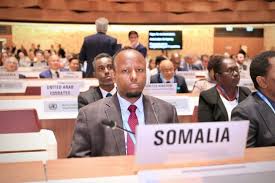
GENEVA — Somalia has once again reaffirmed its commitment to reducing maternal and child mortality by participating in a crucial international summit focused on improving health outcomes for mothers and newborns. The special side event, held in Geneva on the sidelines of the World Health Assembly, brought together major global health actors, including UN agencies, donor countries, and international development partners.
Representing Somalia was Dr. Guled Abdijalil Ali, the Director General of the Ministry of Health and Human Services, who delivered a keynote speech outlining Somalia’s recent milestones and ongoing challenges in maternal and child healthcare.
Also in attendance were:
- Senior representatives from the World Health Organization (WHO)
- Delegates from UNICEF, Gavi, and the Global Fund
- Ministers and officials from over a dozen countries
- Representatives from global donor agencies and foundations
The meeting focused on strategies to reduce maternal and child mortality rates, increase access to vaccinations, and secure sustainable funding for reproductive, maternal, newborn, and child health (RMNCH) services in low-income and fragile states like Somalia.
Dr. Guled presented a comprehensive update on Somalia’s efforts, highlighting:
- The introduction of the PCV (Pneumococcal Conjugate Vaccine) and Rotavirus vaccine, which are vital for preventing deadly infections in children.
- The Ministry’s strategic health plans aimed at reducing preventable maternal and neonatal deaths.
- The critical financing gap that remains a barrier to delivering lifesaving health services in remote and conflict-affected areas.
Somalia remains one of the countries with the highest maternal and infant mortality rates in the world, exacerbated by decades of conflict, displacement, and underinvestment in healthcare systems. According to WHO data, Somalia records approximately:
- 829 maternal deaths per 100,000 live births
- 78 infant deaths per 1,000 live births
Dr. Guled urged the global community to honor their previous commitments, including pledges made at the 2024 World Health Assembly, where Somalia introduced a resolution calling for increased investment in maternal and child health across fragile states.
“We need more than words; we need real funding that reaches communities on the ground,” Dr. Guled said. “If we are serious about achieving Universal Health Coverage (UHC) by 2030, maternal and child health must be prioritized.”
The Ministry of Health plans to:
- Expand its vaccination programs to underserved rural areas
- Increase the number of trained midwives and birth attendants
- Scale up mobile health clinics to reach nomadic and displaced populations
- Strengthen partnerships with local and international NGOs
- Moreover, Somalia is calling for:
- Long-term health sector investments
- Integration of maternal and child health in broader climate resilience and humanitarian planning
- Support for data systems and health workforce training.
Source: Radio Dalsan Origin: view original