Somali Observatory for Humanitarian Affairs The Voice of Reality.. The Eye of Humanitarian Truth in Somalia
Related Articles


By Liban Ahmad
Under the National Policy on Refugee-Returnees and Internally Displaced Persons (IDPs), the Federal Government of Somalia is further committed to protecting citizens from forced displacement resulting from “policies relating to clan affiliation, collective punishment, and other human rights abuses.” This includes protection against the forced eviction of individuals or communities from their homes or land without access to appropriate legal safeguards.
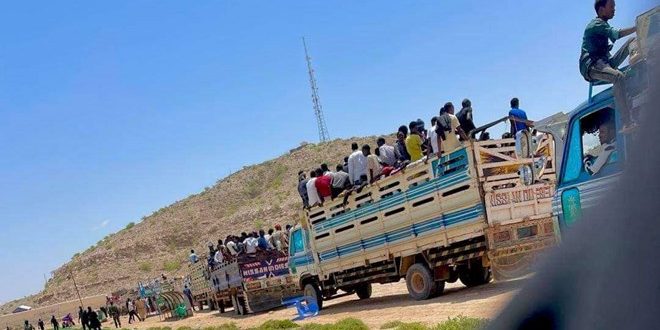
The recent forced displacement of more than 1,500 persons in Las Anod by the Somaliland administration—which categorizes Somalis from the South as “foreigners” settled illegally—constitutes a serious crime under international law. While the Somaliland government cited security concerns as a justification, the move effectively serves as collective punishment. Because Somaliland remains legally a part of the Federal Republic of Somalia, its claim of sovereignty does not exempt it from these obligations; rather, it creates a pretext for illegal displacement.
International law classifies forced displacement as a crime against humanity when committed as part of a widespread or systematic attack directed against a civilian population. As noted by legal expert Federico Andreu-Guzmán, this applies regardless of whether an armed conflict exists.
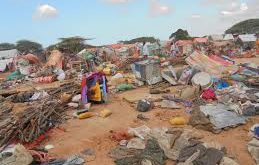
The victims in Las Anod are Internally Displaced Persons (IDPs) who originally fled Southern Somalia to seek safety in the North. Despite many having been born in Las Anod, they were targeted by a unilateral decision made by visiting Somaliland ministers following local discussions regarding recent assassinations in the disputed town. The committee of elders, appointed by Garaad Jama Garaad Ismail, has denounced the move, noting that the victims—including business owners, laborers, women, and children—are Somali citizens whose constitutional rights to protection from habitual residence displacement have been violated.
There is a significant risk that this practice will expand. The Deputy Governor of Sanaag, Mohamed Khalif Noor, has already called on locals to terminate business partnerships with “foreigners,” giving them a two-week ultimatum to leave the region.
A failure to address these actions will foster a culture of impunity. If the Federal Government does not invoke the National Policy on Refugee-Returnees and IDPs—which is binding on all Somali political authorities—forced displacement may become a widespread tool for reprisal. Halting these evictions and allowing citizens to return to their homes could prevent future civil actions against the politicians and traditional leaders involved. Potential targets for such legal actions include Somaliland MPs from Sool, the Speaker of the Somaliland Parliament, the Ministers of Interior, Information, and Transport, as well as specific traditional leaders.
Forced displacement is an emerging national security threat that risks pushing Somalia into a new cycle of civil war. It is worth noting that some officials supporting these measures were once refugees themselves and now hold foreign citizenships. Describing Somali IDPs as “foreigners” is effectively a form of denationalization—the involuntary removal of a citizen’s nationality. The Somaliland administration must rethink these decisions and honor its legal obligation to protect all IDPs living within its jurisdiction.