Somali Observatory for Humanitarian Affairs The Voice of Reality.. The Eye of Humanitarian Truth in Somalia
Related Articles

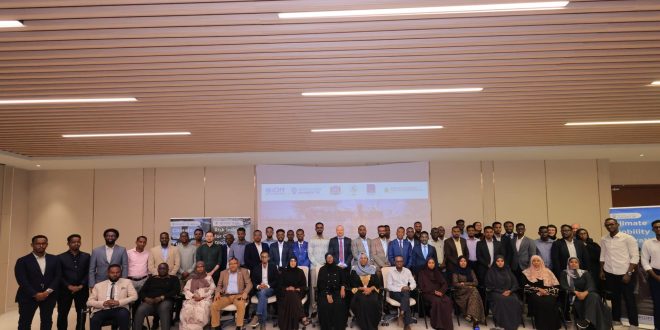
MOGADISHU — As part of its efforts to strengthen national preparedness against the impacts of climate change, the Ministry of Environment and Climate Change of the Federal Government of Somalia held the National Conference on Climate Displacement Issues in Mogadishu for three days, with broad participation from government institutions, international partners, and national and international experts. The conference aimed to develop data-driven solutions to address climate-related displacement risks and enhance institutional capacity for planning and responding to growing environmental challenges.
The Director General of the Ministry of Environment and Climate Change, Abdirisak Ahmed Ali, stated during the opening session that the conference represents a national platform for dialogue, consultation, and experience exchange on climate-induced displacement issues. He stressed the importance of establishing an integrated system based on accurate scientific data to understand climate impacts, predict risks, and develop effective early response mechanisms.
The Director General explained that the conference focused on analyzing official data related to climate displacement and developing the Risk Index for Climate Displacement (RICD) as a scientific tool to help relevant authorities identify areas and communities most vulnerable to climate risks and support evidence-based decision-making.
The conference also highlighted the importance of the Climate Catalytic Fund (CCF), which aims to support vulnerable communities affected by climate risks through rapid financing and targeted programs designed to strengthen resilience and help populations adapt to droughts, floods, and extreme climate events.
The conference featured discussions and scientific presentations delivered by national and international experts, with participation from government institutions, development partners, and relevant stakeholders. Discussions focused on analyzing climate-induced displacement data, developing risk assessment tools, and strengthening institutional cooperation to build a national information-based system supporting planning, decision-making, and climate risk management in Somalia.
Participants emphasized the importance of shifting from emergency response approaches toward proactive planning through developing early warning systems, supporting scientific research, and improving data collection and analysis mechanisms to strengthen Somalia’s ability to address climate impacts and protect the most affected communities.
The conference was organized through cooperation between the Ministry of Environment and Climate Change of the Federal Government of Somalia, the International Organization for Migration (IOM Somalia), Climate Mobility Innovation Lab (CMIL), Somalia Disaster Management Agency (SoDMA), CIMA Research Foundation, and the IGAD Climate Prediction and Applications Centre (IGAD-ICPAC), as part of efforts to strengthen national and international partnerships addressing climate and displacement challenges.
Climate change represents one of the most significant challenges facing Somalia today, as recurring droughts, floods, and severe climate fluctuations continue to affect communities and livelihoods while increasing humanitarian and economic pressures, including internal displacement risks. Somalia is working to build a more resilient national system based on accurate data, early warning systems, and sustainable planning, in cooperation with local and international partners, to strengthen community protection and support sustainable development.