Somali Observatory for Humanitarian Affairs The Voice of Reality.. The Eye of Humanitarian Truth in Somalia
Related Articles


MOGADISHU — In a strategic move reflecting the Somali state’s commitment to consolidating the values of International Humanitarian Law and human rights principles, the capital, Mogadishu, witnessed a high-level institutional drive aimed at forging a new era of protection and responsibility toward citizens in conflict zones.
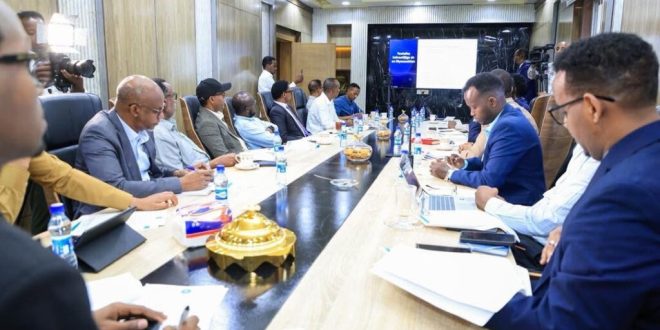
H.E. Abdifatah Abdulkadir Farah, Permanent Secretary of the Ministry of Defense, moderated an extensive consultative meeting yesterday dedicated to discussing and adopting the “National Policy for the Protection of Civilians during Armed Conflicts,” signaling the launch of a new phase of responsible security action.
The Somali National News Agency (SONNA) reported that the meeting aimed to establish a systematic framework to ensure the transformation of theoretical commitments into field practices, guaranteeing the safety of unarmed persons and defining military engagement protocols in populated areas.
The session saw deep deliberations on ways to strengthen oversight and preventative mechanisms, ensuring the alignment of national defense policies with international standards and providing maximum protection for civilians as a top priority in the new security doctrine.
Participants focused, as reported by SONNA, on the necessity of conducting security operations according to the principles of transparency and accountability to minimize collateral risks and enhance mutual trust between the military institution and the public.
The Permanent Secretary of the Ministry of Defense emphasized that drafting this policy was not an isolated act, but rather the result of a national vision recognizing that sustainable security is only achieved by safeguarding human dignity and protecting fundamental rights under all circumstances.
His Excellency noted that the success of implementing this policy requires close coordination and vital integration among various state security and civilian agencies to ensure a smooth transition from planning to effective implementation on the ground.
High-level representatives from the Ministries of Internal Security, Interior, and Justice, alongside field leadership from the National Army and Somali Police Force, participated in the meeting to ensure a comprehensive and multidimensional vision.
The meeting also witnessed active participation from the Disaster Management Agency, the National Commission for Refugees, and the Office of the President’s Special Envoy for Civilian Protection, adding a humanitarian and developmental dimension to the approved security policy.
Participants reviewed successful international models in conflict management and civilian protection, working to adapt them to suit the cultural and social specificities and the security reality of the Somali Republic.
The meeting concluded with the necessity of integrating the provisions of this policy into the training curricula of the armed forces and intensifying awareness campaigns to ensure all field units comply with approved ethical and legal standards.
This step enhances Somalia’s position as a nation seeking to restore its full sovereignty and stability on modern foundations, balancing the requirements of decisiveness in combating terrorism with the moral commitment to protecting lives and property.
The adoption of this national policy represents a fundamental shift in the path of Somali state-building. Institutionalizing civilian protection is not limited to the humanitarian dimension but serves as a strategic tool to delegitimize armed groups and strengthen societal resilience, paving the way for a future where lives are safeguarded and trust is rebuilt between citizens and their sovereign institutions under the rule of law.