Somali Observatory for Humanitarian Affairs The Voice of Reality.. The Eye of Humanitarian Truth in Somalia

Related Articles
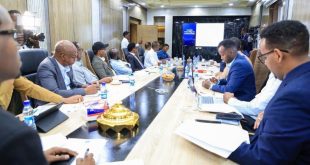
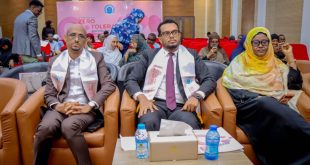
MOGADISHU — H.E. Farah Sheikh Abdulkadir, Somali Minister of Education, received his Djiboutian counterpart, Dr. Nabil Mohammed Ahmed, Minister of Higher Education and Scientific Research, at Aden Abdulle International Airport today. This visit coincides with the inauguration of a new vocational education landmark in the capital, reflecting Somalia’s holistic vision for educational reform.
The Somali National News Agency (SONNA) reported that the Djiboutian Minister’s visit aims at participating in the “Third National Education Conference,” which seeks to draft a roadmap for enhancing higher education quality and fostering academic and research integration within the region.
This high-level meeting embodies the deep-rooted historical ties between Mogadishu and Djibouti. Through this conference, both nations aim to align educational strategies and develop knowledge-exchange mechanisms, emphasizing education as a bridge for regional development and stability.
In parallel with this diplomatic-academic movement, the Ministry of Education took a significant practical step by inaugurating the “Mahmoud Ahmed Ali” Handicraft School in Karan District, in collaboration with the Banadir Regional Administration, following comprehensive rehabilitation and modernization.
The opening ceremony witnessed a prominent official presence led by H.E. Nora Mustafa, State Minister for Education, alongside Banadir regional officials and wide participation from community leaders who welcomed the revival of this vital service facility.
In a statement published by SONNA, the State Minister emphasized that the school’s revitalization is part of a national strategy to position technical and vocational education as a primary engine for economic empowerment, providing youth with handicraft skills for a dignified livelihood.
Her Excellency explained that the ministry aims, through such projects, to bridge the gap between educational outputs and labor market needs, noting that vocational specializations are the backbone of the growth of small and medium enterprises in the country.
Nora Mustafa urged local residents to seize this educational opportunity, asserting that youth engagement in vocational trades is a genuine investment in themselves and in the future of the national economy, which requires a trained and qualified workforce.
These intertwined efforts—between embracing regional expertise and developing local infrastructure—demonstrate the Somali government’s recognition of the necessity to marry academic rigor with field skills to create a generation capable of leading national development.
The synergy between educational diplomacy and vocational training in Somalia represents a qualitative shift toward sustainable development. While international conferences set the theoretical frameworks for quality, handicraft schools provide youth with practical tools for production, transforming economic challenges into opportunities for employment and comprehensive social stability.