Somali Observatory for Humanitarian Affairs The Voice of Reality.. The Eye of Humanitarian Truth in Somalia
Related Articles
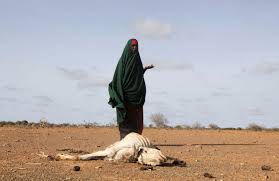
MOGADISHU — The Federal Republic of Somalia is experiencing a state of high humanitarian alert due to a severe drought sweeping across vast areas, causing catastrophic impacts on the agricultural and pastoral sectors.
A report by “Al-Araby Al-Jadeed” indicates that humanitarian conditions in displacement camps have reached critical levels, where thousands of families suffer from near-total food insecurity, forcing many to travel long distances for survival.
The case of Ms. Bishara Ali Yarow, a displaced person at “Rama-Ady” camp, epitomizes the tragedy of millions who lost their livelihoods, transforming from an independent producer to a displaced person awaiting scarce, insufficient aid.
The Somali Federal Government has officially declared that the nation faces a genuine disaster resulting from rapid climate change, which has dried up wells and led to massive livestock deaths in 74 affected districts.
Documented official statistics indicate that the crisis has directly impacted approximately 4.8 million people, while over 200,000 citizens face the risk of imminent famine, amidst warnings of losing nearly two million livestock.
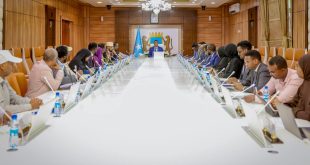
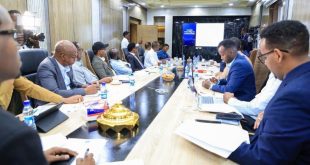
In an urgent response, the Somali Prime Minister Hamza Abdi Barre directed all relevant ministries and institutions to intensify field coordination and accelerate emergency plans, placing citizen protection as the supreme national priority.
Suffering is not limited to food shortages; it extends to a severe water crisis, where displaced persons in camps share very limited quantities of water due to high costs that families simply cannot afford.
Shelter remains another grave challenge, as families reside in primitive tents that offer no protection from the scorching sun or the cold night, increasing the suffering of children lacking basic health protection.
Hussein Ibrahim Adam, a displaced farmer, describes how he lost his tomato, maize, and legume crops entirely, finding himself burdened by debts and unable to provide a single meal for his hungry children.
In “Rama-Ady” camp, which recorded the arrival of 400 new displaced families in a single month, camp leader Abdulkadir Moalim confirmed that health and educational services are non-existent, doubling the burden of displacement.
Internationally, the World Food Programme explained that massive funding gaps forced it to cut aid by 50%, posing a grave danger to vulnerable groups who rely entirely on international relief to survive.
The Somali government has set its urgent funding requirements for 2026 at $852 million, an amount aimed at providing life-saving assistance to approximately 2.4 million people in the regions most affected by drought.
The current international response remains below the scale of the massive challenge posed by climate change in Somalia, necessitating unified global efforts to provide sustainable solutions and support resilience against environmental shocks.
The current drought crisis in Somalia serves as a global alarm regarding the consequences of climate change. “Environmental displacement” has become a pressing reality, requiring significant investments in water infrastructure to ensure sustainable food security.