Somali Observatory for Humanitarian Affairs The Voice of Reality.. The Eye of Humanitarian Truth in Somalia

Related Articles
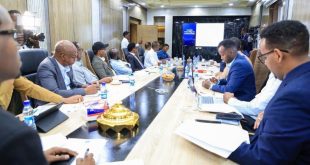

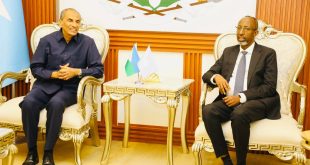
MOGADISHU — The National Emergency Finance Committee of Somalia held an urgent meeting chaired by H.E. Farah Sheikh Abdulkadir, Minister of Education and Committee Chair, to discuss national response mechanisms for the escalating drought crisis affecting large parts of the country.
The meeting brought together senior government officials, religious leaders, and business representatives to address the severe humanitarian impacts of prolonged dry conditions, which have led to environmental degradation and threatened local community stability.
Participants emphasized the critical need to accelerate relief efforts and strengthen coordination among stakeholders to mobilize the necessary financial and logistical support to tackle acute food and water shortages for affected families.
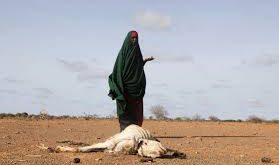
Discussions focused on protecting vulnerable populations and safeguarding livestock—the backbone of the rural economy—while preserving livelihoods severely impacted by dried-up water sources and widespread crop failures across various regions.
Officials warned that delays in swift and coordinated intervention could deepen food insecurity and increase internal displacement, particularly in pastoral areas facing rapid environmental decline and a lack of basic resources.
The committee urged the business community and religious leaders to play a leading role in supporting relief initiatives and fostering social solidarity to bridge funding gaps caused by the decline in international aid amid global crises.
Deliberations noted that recurrent climate shocks exacerbate existing economic and security challenges, necessitating a resilient national response capable of addressing sudden environmental shifts and protecting developmental gains.
The Somali government renewed its appeal to all domestic and international partners to stand by the Somali people during this humanitarian trial, reaffirming its commitment to facilitating aid delivery and ensuring transparent distribution based on national priorities.
The committee concluded the session by affirming that coordination channels will remain permanently open to monitor field developments, with the immediate implementation of a comprehensive emergency plan to provide water trucking and urgent food solutions.
These governmental actions come as the Horn of Africa experiences severe climate fluctuations due to global warming, placing immense pressure on limited natural resources. The National Emergency Finance Committee serves as a strategic link between the state and the private sector to ensure sustainable funding for disaster response and to mitigate socio-economic impacts.